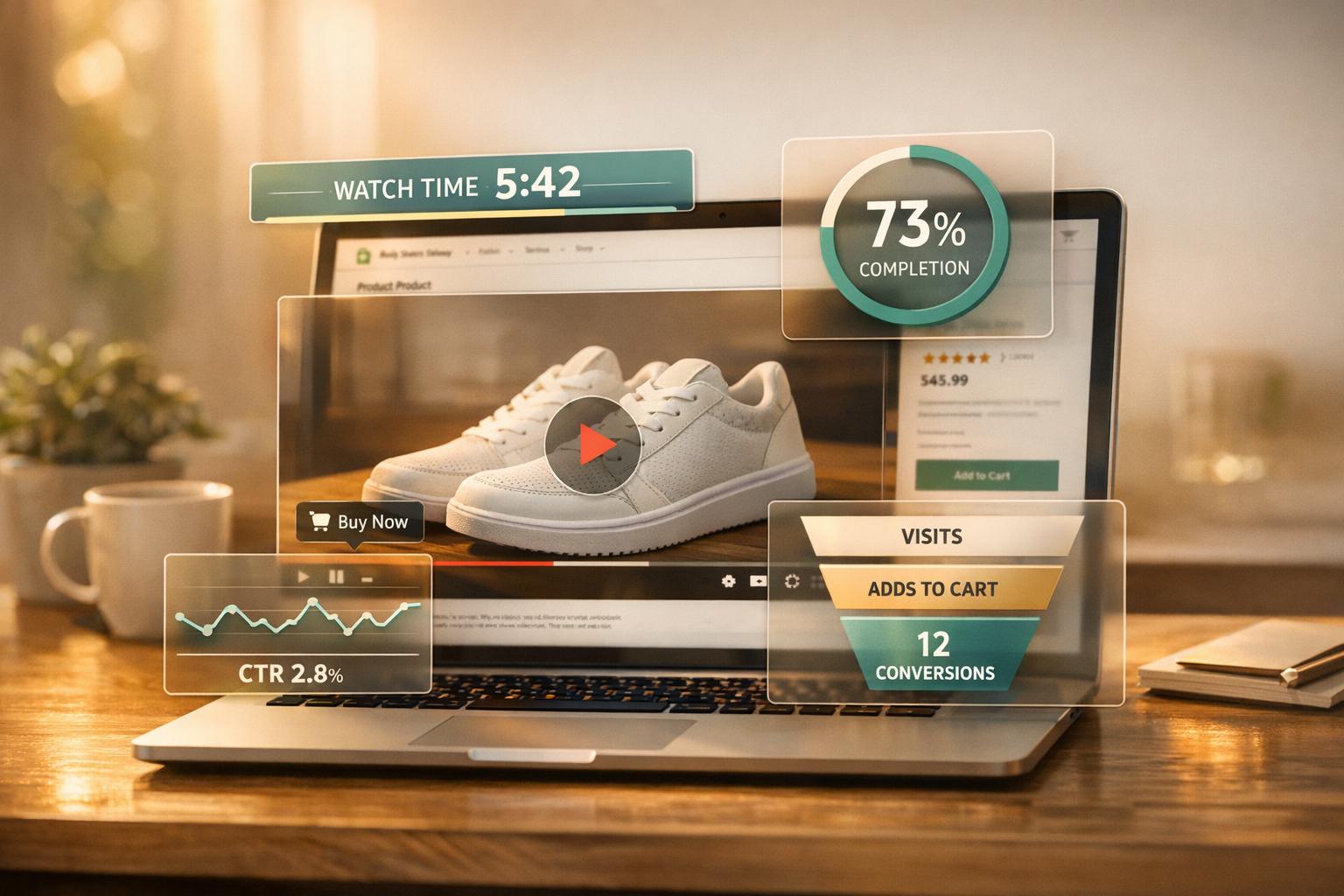
Nearly 70% of online shopping carts are abandoned, costing businesses billions annually. Mobile users face even higher abandonment rates - over 85%. Why? Complicated checkouts, surprise fees, and doubts about product fit are the main culprits.
Shoppable videos tackle these issues head-on by letting customers add items to their cart directly within the video. This smooth, interactive experience:
- Boosts purchase intent by 9x.
- Drops cart abandonment rates to as low as 20–30%.
- Helps shoppers feel confident with better product visuals and real-time engagement.
Brands like Ted Baker and Wayfair have already seen success, with conversion rates rising by 22–33% and product returns dropping by up to 30%. By simplifying the shopping process and addressing hesitation, shoppable videos are transforming e-commerce.
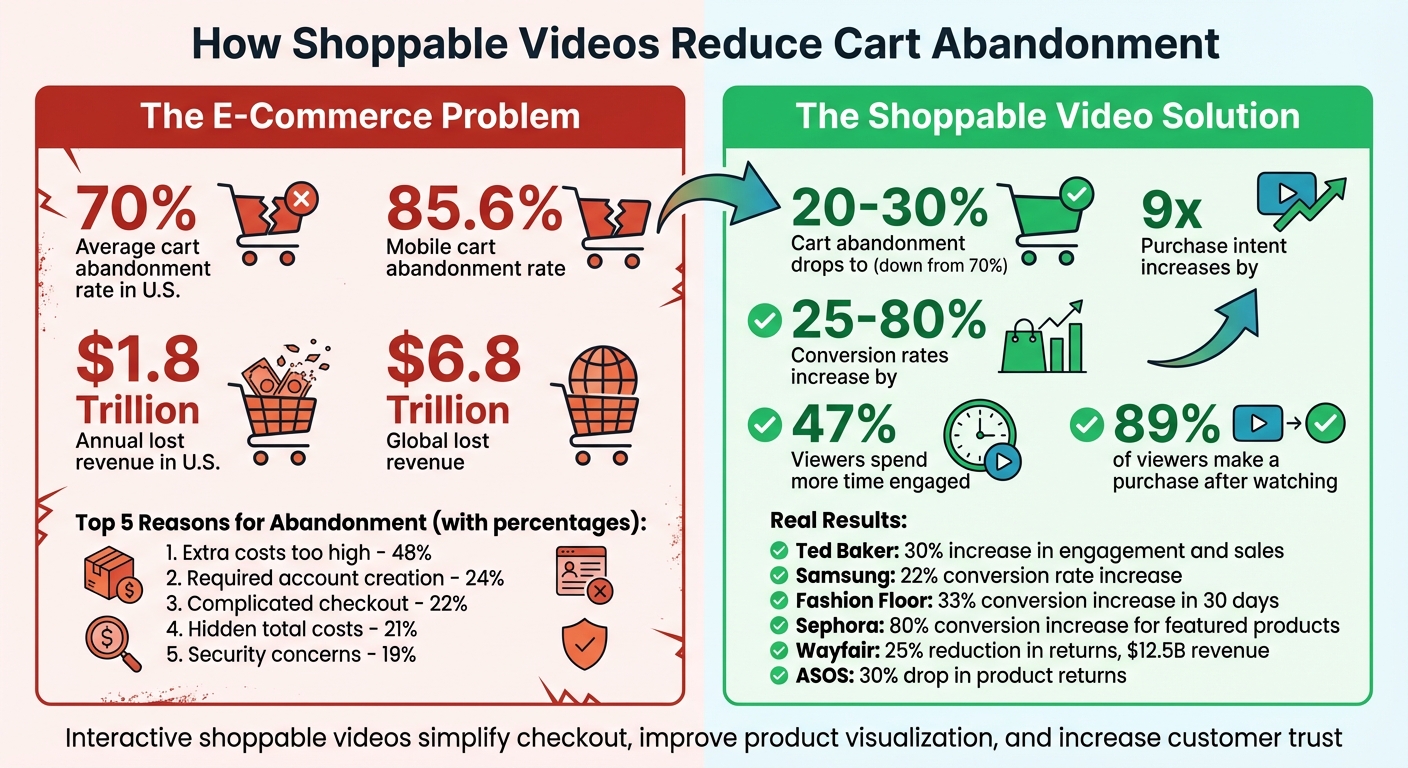
Cart Abandonment Statistics and Impact of Shoppable Videos
What Is Cart Abandonment in E-Commerce
Cart abandonment happens when shoppers add items to their cart but leave without completing the purchase. It’s calculated using this formula: (1 – (Completed Purchases / Shopping Carts Created)) × 100.
As of early 2026, the average cart abandonment rate in the U.S. stood at a staggering 70.22%, meaning nearly 7 out of 10 shoppers didn’t finish their purchases. This rate varies significantly by device, with mobile users abandoning carts at 80.2%, much higher than the 71.8% seen on desktops.
"The average large-sized e-commerce site can increase its conversion rate by 35.26% through better checkout design."
- Christian Holst, Research Director and Co-Founder, Baymard Institute
These numbers highlight the importance of understanding why customers abandon their carts. For example, a store with a 70% abandonment rate loses roughly $2.33 in potential revenue for every $1 it earns. Streamlining the checkout process can help recover a significant portion of this lost income.
Main Reasons Customers Abandon Carts
Shoppers often abandon their carts for predictable reasons. The leading cause? Unexpected extra costs. Nearly half (48%) of customers leave when shipping fees, taxes, or other charges are higher than anticipated. This "sticker shock" at checkout is a major deterrent.
Other common reasons include:
- Account creation requirements: 24% of shoppers prefer a faster, hassle-free checkout without needing to create an account.
- Long or confusing checkout processes: 22% abandon their carts when faced with overly complicated forms, which average 23.48 fields.
- Lack of transparency: 21% leave when they can’t see the total cost upfront.
- Trust and security concerns: 19% hesitate due to outdated websites, missing security badges, or unfamiliar payment options.
- Slow delivery times: 18% of shoppers won’t complete their purchase if delivery takes too long.
Here’s a quick breakdown of the top reasons:
| Primary Reason for Abandonment | Percentage of Shoppers |
|---|---|
| Extra costs too high (shipping, tax, fees) | 48% |
| Site required account creation | 24% |
| Complicated checkout process | 22% |
| Couldn't see total cost upfront | 21% |
| Security concerns/Trust issues | 19% |
| Delivery was too slow | 18% |
Device type also plays a role. Mobile users abandon carts at a higher rate (80.2%) compared to desktops (71.8%) and tablets (77.5%). Small screens, slow load times, and poor navigation often frustrate mobile shoppers, with 40% switching to competitors after a bad mobile experience.
Seasonal trends matter too. During Q4 (October through December), abandonment rates spike to 74.8% as holiday shoppers compare prices and browse without committing to purchases. Millennials aged 25–34, who account for the highest abandonment rates at 21%, often leave items in their carts deliberately, hoping for promotional discounts via email.
Revenue Loss from Cart Abandonment
The financial impact of cart abandonment is enormous. In the U.S., it leads to an estimated $1.8 trillion in lost revenue annually, while the global figure reaches around $6.8 trillion. Retailers collectively lose about $18 billion in sales every year due to abandoned carts.
However, much of this revenue can be recovered. For example, improving checkout design can increase conversion rates by 35.26% and potentially recapture up to $260 billion in lost orders across the U.S. and EU. Abandoned cart email campaigns are another effective tool, recovering 18–20% of lost revenue. The first email, sent within an hour, typically achieves an 8.2% recovery rate.
Even small changes can yield big results for individual retailers. A 10% reduction in abandonment could lead to a 33% boost in conversion rates. Offering guest checkout options increases completed purchases by 45%, while providing free shipping (even with a minimum purchase requirement) reduces abandonment by 15%. Adding digital wallet options, like Apple Pay or PayPal, can decrease mobile cart abandonment by 18%.
sbb-itb-d9e5b3a
How Shoppable Videos Reduce Cart Abandonment
Shoppable videos tackle one of e-commerce's biggest challenges: cart abandonment. By addressing the common reasons customers leave without completing a purchase, these videos create a smoother path to checkout. Instead of requiring users to navigate through multiple steps, shoppable videos allow them to add items to their cart directly while watching. This streamlined experience removes the friction that often causes shoppers to give up.
Brands have seen cart abandonment rates drop dramatically - from the typical 70% to as low as 20–30%. This improvement is driven by three main factors: better product visualization, a simplified shopping process, and increased engagement. Together, these elements form an effective strategy to reduce cart abandonment.
Better Product Visualization
Static images often fall short when it comes to addressing customer doubts. Without the ability to touch or try items, online shoppers can feel uncertain, which can lead to hesitation and lost sales. Shoppable videos solve this problem by providing dynamic, detailed views of products, showing how they work, and placing them in relatable, everyday scenarios.
According to data, 70% of consumers say videos help them understand products better, and 73% prefer watching a video over reading about a product. This clarity helps eliminate hesitation. For instance, Samsung's interactive product videos for the Galaxy Z Fold allowed viewers to explore its features and add the device to their cart directly within the video. The result? A 22% increase in conversion rates.
ASOS also leveraged video to showcase how clothing fits and moves on real models. This approach led to a 30% drop in product return rates, as customers felt more confident about their choices. By delivering clearer visuals, shoppable videos make the decision-making process easier and more reliable.
Simplified Shopping Process
One of the standout features of shoppable videos is the ability for customers to shop without leaving the video. This seamless experience is especially important for mobile shoppers, who face an abandonment rate of 85.6%, compared to 73.1% on desktops.
Take Fashion Floor, for example. After integrating shoppable videos into their Shopify store, the company saw a 33% increase in conversion rates within 30 days. The key? Simplifying the journey. Instead of forcing users to watch a video, search for the product, and then add it to their cart, these videos enable everything to happen in one fluid interaction.
"We always talk about the fact that every time someone has to click on a website, you lose 10% of conversions... Fastlane by PayPal eliminates unnecessary steps, allowing customers to check out seamlessly without second-guessing their decision."
- Daniel Burrow, VP of Sales and Marketing, UPLIFT Desk
Mobile optimization makes this process even more effective. Vertical video formats and thumb-friendly click zones align with how people naturally use their phones, making it easier for on-the-go shoppers to complete purchases without frustration.
Higher Engagement and Customer Trust
Shoppable videos don’t just make shopping easier - they make it more engaging. Interactive features, like clickable hotspots, product tags, and AI-driven recommendations, turn passive viewers into active participants. On average, viewers spend 47% more time watching interactive videos compared to traditional ones, and this extended engagement often leads to higher sales.
The impact is clear: Interactive shoppable content increases purchase intent by 9x compared to standard video, and 89% of viewers report making a purchase after watching a video. One standout example is Ted Baker’s campaign, "Keeping Up With The Bakers", which allowed viewers to click on items worn by actors to purchase them instantly. This approach led to a 30% boost in both engagement and sales.
Trust is another major factor. Videos featuring user-generated content or real customer demonstrations feel more relatable and genuine than polished brand imagery. Sephora’s "Virtual Artist" tool combined augmented reality with shoppable videos, enabling virtual makeup try-ons. This interactive feature drove an 80% increase in conversion rates for highlighted products.
Adding urgency through features like live countdown timers, "sold out" alerts, and limited-time offers further encourages hesitant shoppers to act. When customers can see products in action, interact with the video, and complete their purchase without hassle, the usual reasons for abandoning a cart fade away.
Real Examples of Shoppable Video Success
Ted Baker's Interactive Video Campaign
Ted Baker introduced two standout shoppable video campaigns, "Mission Impeccable" and "Keeping Up With The Bakers", which featured interactive elements that transformed how customers engaged with their products. These campaigns led to a 30% boost in both customer engagement and sales. The videos allowed shoppers to add items directly to their cart while watching, creating a seamless shopping experience.
"Now any product you select literally goes into your bag for checkout"
- Craig Smith, Brand Communication Director, Ted Baker
Ted Baker didn’t stop at their own website. They extended these shoppable videos to platforms like ASOS, Selfridges, and Nordstrom, ensuring a smooth, consistent shopping journey for customers across multiple points of sale.
Wayfair's Video and AR Tools
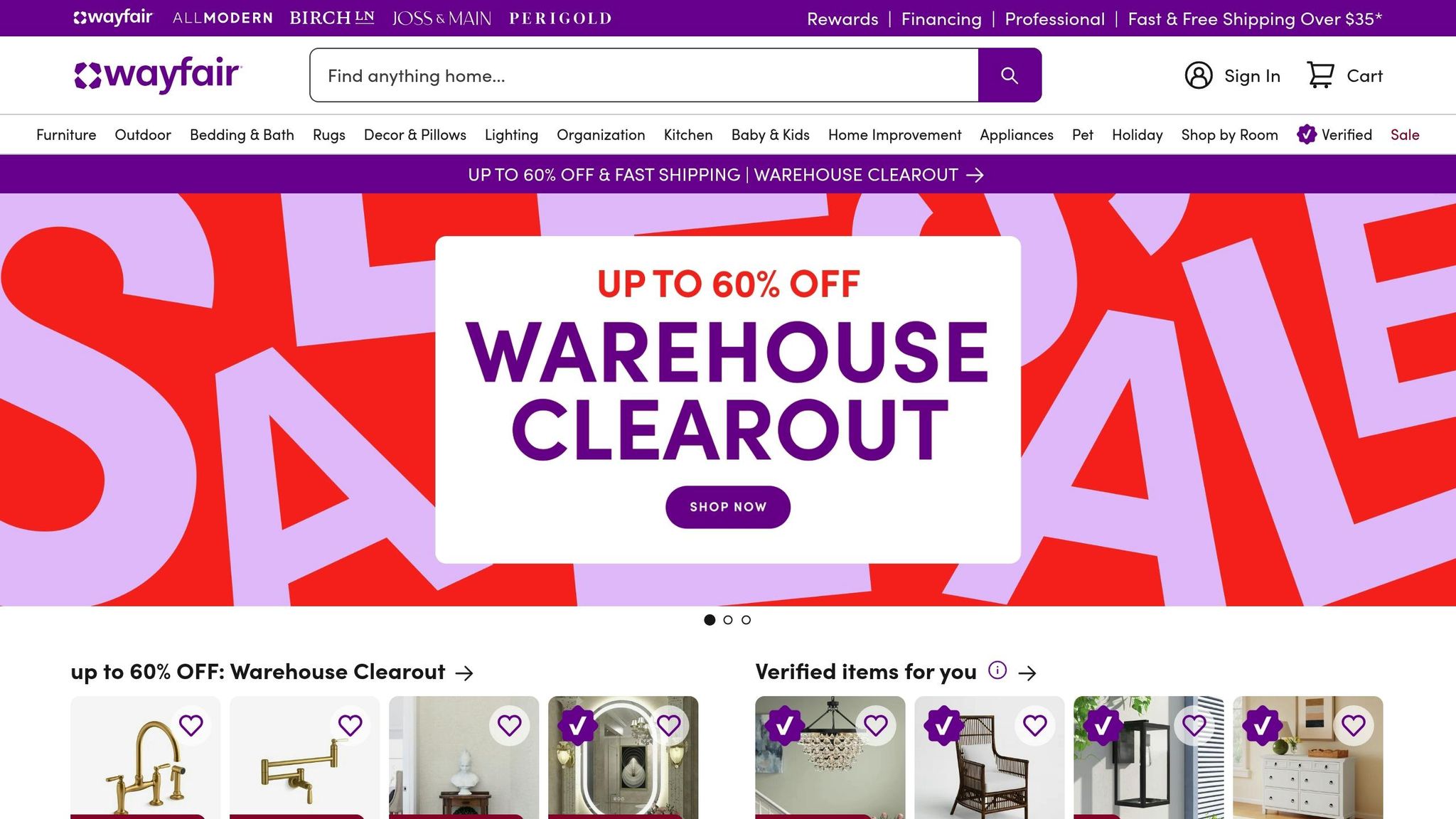
Wayfair took a different approach, blending shoppable videos with augmented reality (AR) to address a common challenge in furniture shopping: hesitation. In 2024–2025, the company launched "View in Room" AR videos, letting customers see how furniture would look in their actual spaces before buying. This innovation directly reduced uncertainty and drove impressive results.
Wayfair’s AR-enabled videos led to a 25% reduction in product returns, a 5.1% increase in annual revenue (reaching $12.5 billion), and an increase in the average order value from $290 to $301. These achievements were particularly notable during a tough period for the furniture industry, which faced high interest rates and slow home sales.
"2025 was a year where we returned to growth and accelerated throughout the year through a number of organic business strategies that can compound for years to come"
- Niraj Shah, CEO, Wayfair
"The combination of these customer-facing initiatives, I think, has helped us take share in what we think was still quite a challenged category"
- Kate Gulliver, CFO, Wayfair
Wayfair’s success proved that leveraging interactive technology can offer a strong edge, even in difficult market conditions.
New Technologies in Shoppable Videos
AR and Virtual Try-On Features
Augmented reality (AR) is transforming how people shop by letting them interact with products in ways that feel almost tangible. Imagine being able to see how a couch fits in your living room or how a lipstick shade looks on your skin - right through your phone screen. This is exactly what AR offers, bringing products to life in a personal and interactive way.
Beauty brands that use AR virtual try-on tools have seen conversion rates jump by 80% for featured products. On top of that, these tools have helped cut return rates by up to 25%. Why? They tackle one of the biggest reasons people hesitate to buy: uncertainty about whether a product will meet their needs.
With just a phone camera, shoppers can overlay realistic 3D models of products onto their spaces or even themselves. They can rotate the item, change its color, and explore details - all without leaving the video player. This seamless "see-now-buy-now" experience eliminates the guesswork that often causes people to abandon their carts.
Looking ahead, AR is expected to become a staple in shopping. By 2025, 75% of global consumers and brands are predicted to use AR tools regularly. Retailers are already stepping up, creating immersive 3D showrooms where customers can redesign entire spaces - removing old furniture and visualizing new items before making a purchase.
While AR makes shopping more interactive, artificial intelligence (AI) takes it a step further by tailoring the experience to individual shoppers.
AI-Powered Product Recommendations
AI is reshaping how products are recommended by analyzing everything from viewing habits to past purchases. This level of personalization can boost revenue by 6-10% for brands.
But AI goes beyond just suggesting products. It can sense when a shopper is hesitating - say, lingering on a product's color options - and then adjust the video content in real time to address their concerns. For instance, the AI might display different angles or highlight key features to help the shopper make a decision.
"The future of shoppable videos lies in a symbiotic dance between AI and human creativity." - Zeus Irani, Vidjet
Personalized calls-to-action are another game-changer, converting 202% better than generic ones. Predictive analytics also play a big role in reducing cart abandonment, cutting rates by up to 35% by identifying when a viewer might drop off and taking proactive steps to keep them engaged. It’s no wonder that 91% of consumers say they prefer shopping with brands that offer tailored recommendations and offers.
Conclusion
Shoppable videos have proven to be a game-changer for e-commerce, addressing common challenges like product uncertainty and complicated checkout processes. By showing products in relatable, everyday scenarios - like a backpack being packed or a couch seamlessly fitting into a living room - these videos give shoppers the confidence they need to hit "Buy Now."
The numbers back this up: shoppable videos can increase e-commerce conversion rates by anywhere from 25% to 80%. Interactive video content also ramps up purchase intent by as much as nine times compared to standard video ads. For example, in 2023, skincare brand Dr. Dennis Gross saw an 8.2% conversion rate and over $1 million in revenue from shoppable videos on their Shopify store, with $50,000 in orders coming directly through the video interface. Tortuga Backpacks also saw impressive results, with a 3.5% increase in conversion rates and a 16% rise in revenue per visitor after incorporating shoppable video content.
What makes shoppable videos so effective is their ability to simplify the buying process. By letting customers add items to their cart directly within the video player, brands eliminate the hassle of multiple checkout steps. This keeps viewers engaged 47% longer compared to traditional video formats, a critical advantage in battling the staggering 70% of online shopping carts that are abandoned.
With their ability to reduce navigation hurdles and build trust through genuine product demonstrations, shoppable videos have cemented their place as a powerful tool for decreasing cart abandonment and driving revenue growth. They’re not just a trend - they’re a practical solution for modern e-commerce.
FAQs
Where should I place shoppable videos on my store to cut abandonment?
Shoppable videos are most effective when featured on the homepage and product pages. The homepage serves as the first touchpoint, capturing visitors' interest right away. Meanwhile, product pages allow for deeper engagement, offering detailed content that can inspire shoppers to add items to their cart and follow through with a purchase. Placing videos strategically in these areas can play a big role in lowering cart abandonment rates and boosting conversions.
What metrics prove shoppable videos reduce cart abandonment?
Shoppable videos can be a game-changer for reducing cart abandonment, and the proof lies in the numbers. Two key metrics to watch are the add-to-cart rate and the conversion rate. The add-to-cart rate shows how many viewers add products to their cart after watching a video, while the conversion rate tracks the percentage of viewers who go on to complete a purchase. Together, these figures offer a clear picture of how shoppable videos can enhance e-commerce success.
Do shoppable videos work better on mobile than desktop?
Shoppable videos tend to perform better on mobile devices compared to desktops. They offer an interactive shopping experience directly within the video, making it easier and more intuitive for mobile users to engage. This format fits perfectly with the way people browse on their phones, allowing them to shop without interrupting the video. Plus, it helps cut down on cart abandonment by streamlining the process.