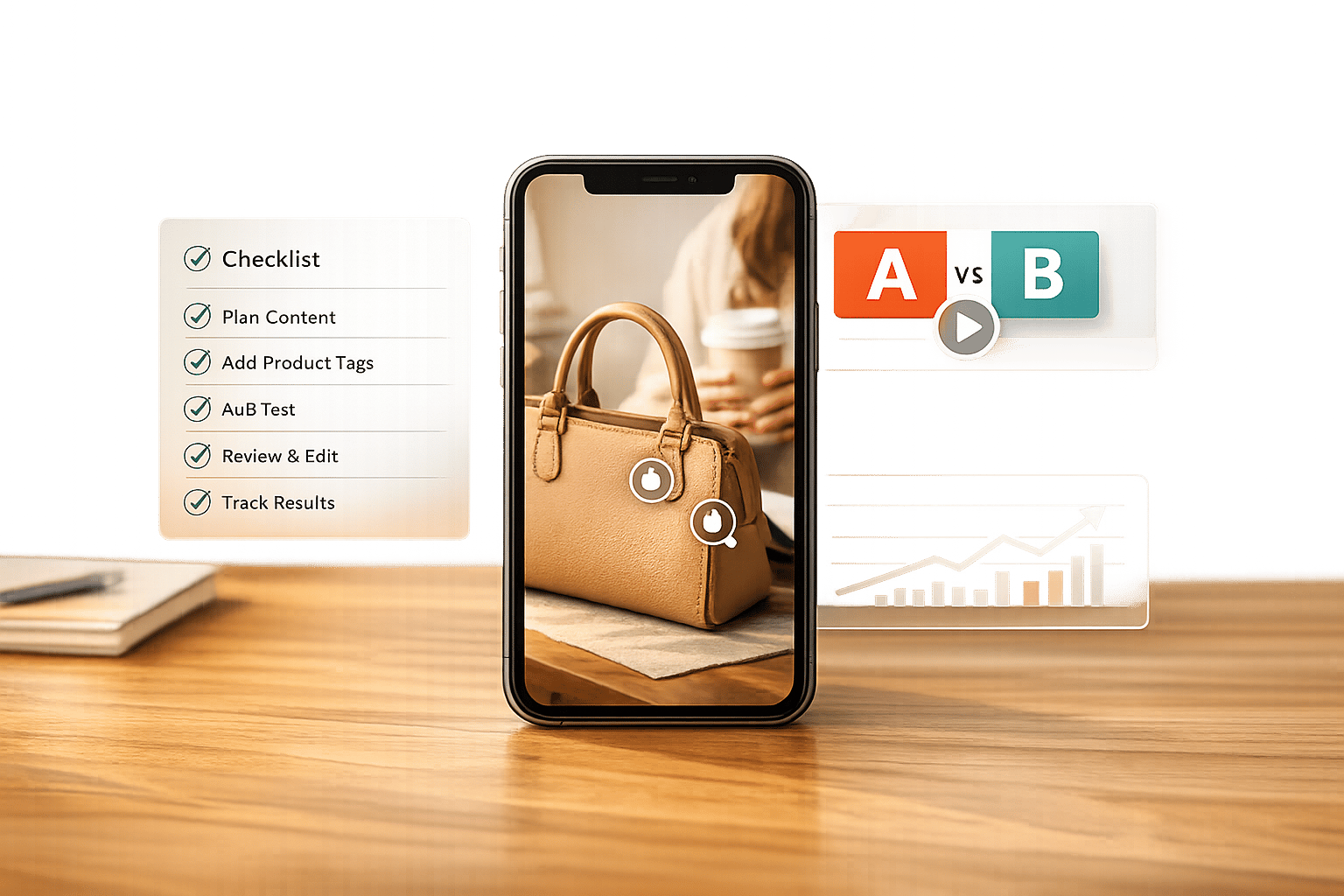
Shoppable influencer videos combine relatable product recommendations with the ease of direct purchasing. They build trust by showcasing products in real-life scenarios, backed by influencers' honest opinions. Here's why they're effective:
- Direct Purchases: Viewers can buy products straight from videos through clickable tags.
- Trust Factor: Over 60% of consumers trust influencer reviews more than branded content.
- Proven Results: Brands like Tushbaby generated $500,000+ in sales within seven months using these videos.
- Higher Conversions: Shoppable video links can increase conversion rates by 30%.
To get started, choose influencers who align with your brand, create engaging short-form content, and use tools like UWidget to embed videos with product tags on your Shopify store. Track metrics like conversion rates and engagement to refine your approach and strengthen customer relationships.
How Shoppable Influencer Videos Work
What Are Shoppable Influencer Videos?
Shoppable influencer videos are a game-changer for online shopping. These interactive videos allow viewers to purchase featured products directly within the video itself. Unlike traditional influencer posts, these videos include clickable product tags that streamline the buying process.
For instance, during an unboxing, tutorial, or product review, clickable tags appear on the screen. Viewers can instantly add items to their cart without ever leaving the video. As Shopify explains:
"Shoppable video technology lets ecommerce businesses turn video content into a vehicle for direct conversions".
This approach turns passive viewing into an active shopping experience, making it easier for customers to engage with products. By reducing friction in the buying process, these videos help build stronger connections with potential buyers.
Why Trust Matters in E-Commerce
Shopping online can feel like a gamble since customers can’t physically see or touch the products. Influencers help bridge that gap by showcasing products in real-life settings. Their honest reviews and demonstrations resonate with audiences - 92% of consumers say they trust recommendations from individuals more than branded content.
Shoppable videos take this trust to the next level. They combine the authenticity of influencer content with the convenience of immediate purchasing. Viewers see products in action, paired with genuine commentary, which helps ease doubts and builds confidence. The ability to buy instantly turns that trust into action. For example, Dr. Squatch used interactive shoppable videos featuring customer reviews and testimonials, which not only reduced hesitation but also boosted revenue per session.
As Rohin Aggarwal of Idukki.io puts it:
"The combination of video interactivity and UGC creates an unparalleled shopping experience that builds trust and drives sales".
Shoppable Videos: Before & After
How to Create and Use Shoppable Influencer Videos
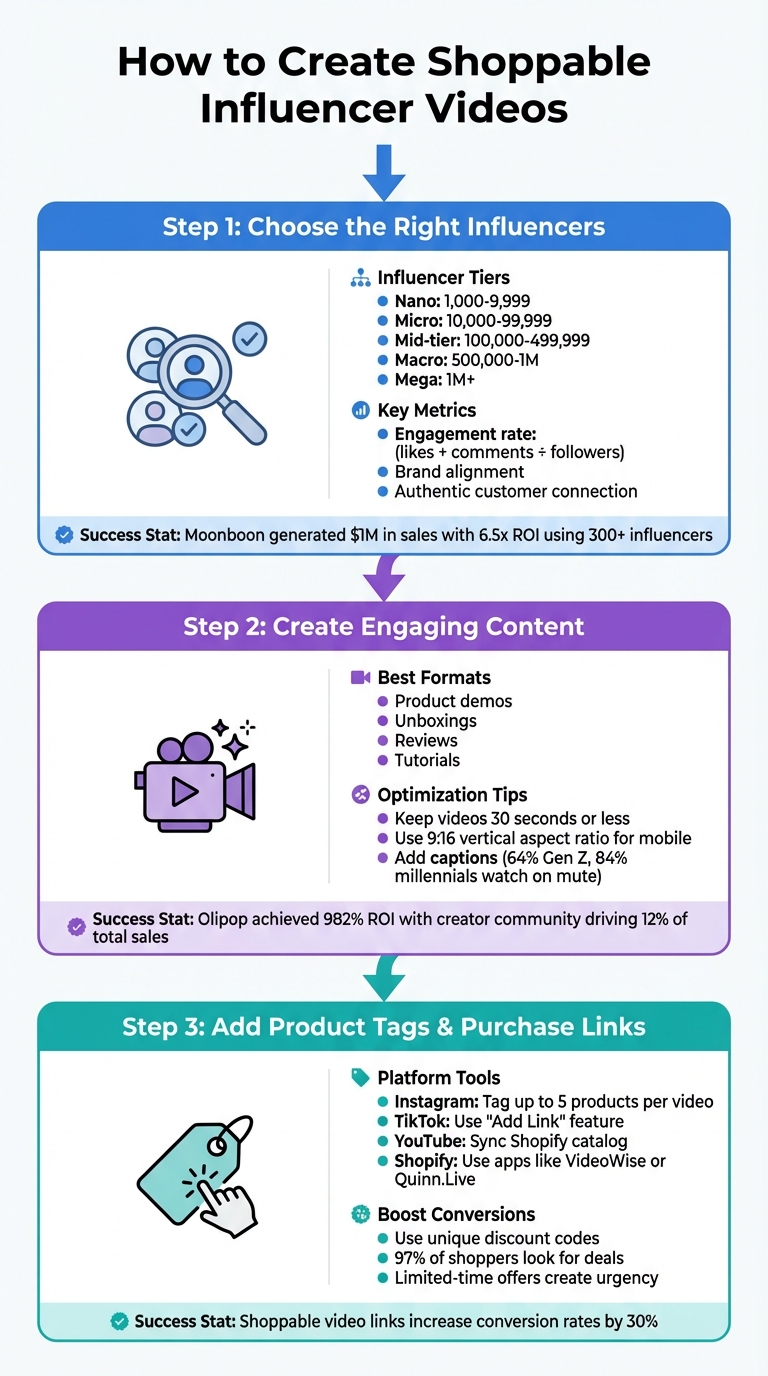
3-Step Guide to Creating Shoppable Influencer Videos for E-Commerce
Step 1: Choose the Right Influencers
Influencers are typically categorized by their follower count: Nano (1,000–9,999), Micro (10,000–99,999), Mid-tier (100,000–499,999), Macro (500,000–1 million), and Mega (1 million+). Interestingly, smaller influencers often perform better for niche products because they tend to have higher engagement rates and a stronger connection with their audience. You can calculate engagement by dividing the total likes and comments on recent posts by the influencer's follower count. Beyond numbers, make sure the influencer’s style and values align with your brand.
"My tip for ecommerce brands would be to start looking for influencers and creators that are already customers. Nothing is as authentic as someone who already knows and loves your products or services".
For example, Moonboon collaborated with over 300 influencers across five European markets using Shopify Collabs, leading to $1 million in net sales and an average ROI of 6.5x. Similarly, Peace Out Skincare’s TikTok campaign sold six months' worth of inventory in just three weeks.
Once you’ve identified influencers who resonate with your brand and audience, the next step is to focus on creating content that feels genuine and engaging.
Step 2: Create Engaging Content
The best-performing videos often feature formats like product demos, unboxings, reviews, and tutorials. Keep them short and snappy - 30 seconds or less works best - and make sure they’re optimized for mobile with a 9:16 vertical aspect ratio.
Authenticity is key to building trust, which is essential for turning viewers into buyers. Since a large portion of social media users - 64% of Gen Z and 84% of millennials - watch videos on mute, adding captions or text overlays ensures your message gets across.
"You're not just paying an influencer to post about your product. You're forming a relationship with a director, a producer, a filmer, the talent, the editor… but all as one person. View your work with creators as a partnership".
Take Olipop as an example. They built a community of creators that now drives 12% of their total sales, achieving an impressive 982% ROI by combining product seeding with performance-based commissions.
Once you’ve nailed the content, the next step is to make it shoppable by adding direct purchase options.
Step 3: Add Product Tags and Purchase Links
Transform your videos into instant shopping experiences with product tags and clickable links. Different platforms offer unique tools to make this seamless:
- Instagram: Use native shopping tools to tag up to five products per video.
- TikTok: Connect your Shopify store, upload the video, and use the "Add Link" feature to include a product.
- YouTube: Join the YouTube Partner Program and sync your Shopify catalog to tag or pin products in your videos or livestreams.
- Shopify site: Use apps like VideoWise or Quinn.Live to embed influencer videos with clickable "Add to Cart" buttons.
Additionally, leverage Shopify Collabs to assign influencers unique discount codes. These codes not only create urgency but also encourage immediate purchases. Considering 97% of shoppers hunt for deals or discounts, offering limited-time codes can be a game-changer for boosting conversions.
sbb-itb-d9e5b3a
Adding Shoppable Videos to Your Shopify Store

Using UWidget for Video Integration
Once your videos are shoppable, the next step is integrating them into your Shopify store to boost customer engagement. A great tool for this is UWidget, which makes embedding shoppable videos quick and simple. All it takes is pasting a YouTube URL, tweaking the widget settings to fit your store’s look, and publishing it - done in just a few minutes.
UWidget offers several display options to match your store’s design, such as video galleries, carousel sliders, grids, sticky videos, and video banner backgrounds. The sticky video feature is particularly useful, as it keeps influencer content visible while customers scroll through product details. Plus, the app is optimized for speed, using responsive, thumbnail-first widgets with lazy loading to ensure your page performance stays intact.
Another standout feature is the ability to tag products directly in the videos, creating a seamless shopping experience. Pricing starts at $5.99/month for the Starter Plan, which includes one widget and up to 25 videos, and scales to $19.99/month for unlimited widgets and videos. A 7-day free trial is included with all plans, letting you explore the app risk-free. With a perfect 5.0/5 star rating on the Shopify App Store, UWidget is a solid choice for stores of any size. Once your videos are embedded, placing them strategically can amplify their impact.
Where to Place Videos for Best Results
Where you position your shoppable videos can make all the difference in how effective they are. On product pages, placing videos near product images works wonders. Use them to showcase demonstrations, 360° views, or customer testimonials - right where shoppers are deciding whether to buy. Videos placed above the fold can increase engagement by 50%, while landing page videos have been shown to boost conversions by 80%.
Your homepage is another prime spot. Here, videos can tell your brand’s story or highlight featured products, helping to build trust with first-time visitors. On collection pages, short videos that offer an overview of categories or styling tips can guide customers through your catalog. In fact, adding video widgets to an online store can increase conversions by up to 3.5x. Visitors who watch videos also tend to stick around for an extra two minutes and are 64% more likely to make a purchase. When done right, these videos don’t just increase sales - they also strengthen the credibility of your store through authentic influencer content.
"Shoppable videos keep your customers engaged and encourage them to buy." – Posstack
Video reviews are especially powerful, increasing the likelihood of a purchase by 120.5% and extending on-site time by 157.2%. To optimize for mobile users - who make up a large portion of Shopify traffic - use vertical (9:16) or square formats. Keep videos short, ideally 15–30 seconds, to hold attention and reduce drop-off rates. Lastly, avoid autoplay with sound to prevent browser issues and ensure a smooth user experience.
Measuring Results: Building Trust Through Influencer Videos
Key Metrics to Track
Once your shoppable videos go live, tracking the right metrics helps you understand if they’re driving sales and building trust. Start by focusing on conversion metrics - specifically, the difference between direct sales (purchases made during the video session) and influenced sales (purchases made after watching at least five seconds of the video but without using the built-in checkout tool). This breakdown highlights how effectively your videos guide customers through their buying journey.
Next, dive into engagement metrics for deeper insights. Keep an eye on video completion rates, average watch time, and on-site added time (the extra time shoppers spend on your site after interacting with the video). For example, in 2023, Stephen Pinto, Head of Growth at Dr. Squatch, shared that shoppable video tests increased revenue per session by nearly 3.2%.
To measure trust, look at engagement rates - likes, shares, comments, and brand mentions. These show whether influencer content is sparking genuine connections. Also, track click-through rates on product tags and video swipes to see how users navigate your shoppable content. A great example is the UK retailer Flannels, which teamed up with influencers for the #PartyNeverStops TikTok campaign in late 2023. The campaign generated £3.68M in sales, achieved an 18x return on ad spend, and reached 11.9 million unique users.
Use tools like UTM parameters and platform pixels to connect influencer video views to specific website traffic and conversions. Segment your data by video type - like unboxing, tutorials, or reviews - and placement, such as product pages versus the homepage. This helps pinpoint which formats and placements resonate most with viewers. A/B testing video lengths, call-to-action placements, and interactive features can further refine your approach to balance trust-building and sales. These numbers show how interactive videos strengthen customer trust, which is the foundation for long-term loyalty.
Building Long-Term Customer Relationships
Shoppable influencer videos do more than drive one-time purchases - they help nurture lasting customer relationships. The engagement metrics mentioned earlier lay the groundwork for loyalty. To separate short-term gains from long-term impact, track metrics like repeat purchase rate and average order value over time.
Dig deeper into session time and the number of videos watched per shopper to gauge brand affinity and sustained interest. For example, Dr. Dennis Gross Skincare saw a 17% increase in overall site conversion rates after incorporating shoppable videos into their strategy, according to Growth Marketing lead Anton Blagov. Similarly, High Sport used product seeding with fashion writers and Substack creators before launching an affiliate program offering a 15% commission - one post alone sold 40 pairs of premium pants.
Another key measure is Share of Voice, which tracks organic conversations about your brand. Social listening tools can help identify untagged mentions and keywords, showing whether influencer videos are fueling authentic word-of-mouth buzz. Interestingly, nano-influencers (1,000–10,000 followers) boast TikTok engagement rates of 10.3%, far surpassing the 7.1% rate for influencers with over 500,000 followers. This highlights their ability to build tight-knit, engaged communities.
"Seeding isn't about immediate return on investment but about cultivating trust and relationships that grow over time." – Shopify Staff
Look for steady growth in social media followers or newsletter sign-ups directly tied to influencer videos. These are strong indicators that your content is building a loyal audience. Considering that 60% of consumers trust influencer reviews - nearly twice as much as branded content - these relationships are invaluable for driving long-term growth.
Conclusion
Shoppable influencer videos are changing the way trust is built on your Shopify store. By blending influencer recommendations with the convenience of direct purchasing, you can create a shopping experience that feels both personal and trustworthy. Research highlights that 60% of consumers rely on influencer reviews for purchase decisions, and shoppable videos have been shown to increase conversion rates by 30%.
Here’s the formula: Find influencers who align with your brand, create captivating video content, and make the buying process seamless. Tools like UWidget make it easy to embed YouTube videos with clickable product tags directly onto your product pages and homepage. This keeps your customers engaged without redirecting them away from your site.
Building trust takes time, so keep an eye on engagement metrics like watch times and conversion rates to see what resonates with your audience. Regularly tracking these numbers will help you refine your approach and uncover the strategies that foster stronger connections and drive sales.
Start small - partner with one or two influencers who genuinely reflect your brand’s values. Experiment with video types such as unboxings, tutorials, or authentic product reviews, and place them strategically on pages where shoppers might need a little extra confidence. With 91% of businesses using video marketing in 2023, there’s no better time to make your videos shoppable. By embracing this strategy, you’re not just boosting engagement - you’re turning it into loyal customers and steady growth. Shoppable influencer videos aren’t just a trend; they’re a way to build lasting relationships with your audience.
FAQs
How do shoppable influencer videos help build trust with customers?
Shoppable influencer videos build trust by presenting content from influencers in a way that feels natural and relatable. These videos often highlight everyday use of products, giving shoppers a clearer idea of how the items fit into real life, which boosts confidence in their buying choices.
What makes them even more effective is the integration of clickable product links directly within the video. This feature lets viewers see the products in action and buy them instantly, offering a blend of convenience and transparency that enhances the overall shopping experience.
What key metrics should I monitor to evaluate the impact of shoppable influencer videos?
To evaluate the performance of shoppable influencer videos, keep an eye on these essential metrics:
- Video views and watch time: These reveal how much interest and attention the content is generating.
- Click-through rates on shoppable tags: This shows how well the video encourages viewers to take action.
- Video-influenced orders and total sales: A direct measure of how the video impacts revenue.
- Conversion rates and average order value (AOV): These metrics help determine the return on investment.
- Engagement metrics like likes, comments, and shares: These highlight how actively the audience is interacting with the content.
By analyzing these data points, you can fine-tune your approach to better resonate with your audience, build trust, and encourage loyalty for your Shopify store.
How do I select the best influencers for my shoppable video campaign?
To pick the right influencers for your shoppable video campaign, start by pinpointing your target audience. Think about details like their age, interests, and buying habits. Then, look for influencers whose followers match this profile. Social media analytics tools can be a big help here, giving you insights into audience demographics and engagement levels.
Once you've narrowed down potential influencers, focus on their authenticity. Influencers who produce content that feels real and relatable - like tutorials, product reviews, or lifestyle videos - tend to build more trust with their audience. This trust often translates into higher interaction with shoppable links. To ensure they can deliver results, check out their past performance metrics, such as click-through rates and conversions.
Before finalizing your choice, take a closer look at the quality of their videos, how smoothly they can feature Shopify products, and their overall on-camera presence. Running a small trial campaign, such as a single TikTok or Instagram Reel, can give you a sense of their effectiveness. To make the shopping experience even better, consider tools like Fractal Apps’ UWidget, which lets you embed clickable influencer videos directly into your Shopify store.