AI shoppable videos are transforming how customers shop online by making products in videos clickable and purchasable without leaving the video. Unlike static images or regular videos, this technology simplifies the buying process, driving higher engagement and conversions. Here’s why they work:
- Higher Conversion Rates: Shoppable videos can boost conversion rates up to 8.2%, compared to 1.4% for static images.
- Seamless Shopping: Products are tagged in the video, allowing viewers to add items to their cart instantly.
- Increased Engagement: Viewers spend more time on pages with shoppable videos, leading to more sales.
- Reduced Returns: AI try-on features help customers make informed decisions, decreasing return rates.
For Shopify users, apps like UWidget make it easy to integrate shoppable videos into your store. By linking video content directly to your inventory, you can enhance the shopping experience and improve revenue without additional ad spend.
The Problem: Low Conversion Rates and Poor Customer Engagement
Static Content Falls Short in Capturing Attention
Static images often leave customers guessing about how a product looks or functions in real life. This uncertainty leads to hesitation, which often results in abandoned carts. On Shopify stores, static images only achieve an average conversion rate of 1.4%, with shoppers spending a mere 38 seconds engaging with these visuals before moving on to something else. While desktop users convert 58% more often than mobile users when interacting with static content, most Shopify traffic now comes from mobile devices. For customers scrolling on smaller screens, flat images simply don’t provide the clarity they need.
"Shoppers no longer want to scroll through endless static product pages; they want clarity, speed, and a seamless path to checkout."
- Rhea Jotsinghani, ReelUp
Traditional videos don’t fare much better. While they can capture initial interest, they often disrupt the path to purchase.
Why Traditional Videos Miss the Mark
Standard product videos do a great job of grabbing attention but fall short when it comes to closing the sale. Even though 88% of people say they’ve been influenced to buy after watching a video, the format itself creates friction. Viewers are forced to leave the video to search for the product and complete their purchase. Every extra step in this process increases the chance that shoppers will abandon their carts altogether.
This disconnect between sparking interest and completing a purchase is often referred to as the "messy middle" - the limbo where customers lose momentum while verifying product details, comparing prices, or reading reviews. Many never make it back to finalize their purchase.
In 2023, Dr. Dennis Gross tackled this issue by switching from traditional videos to shoppable ones. The result? An impressive 8.2% conversion rate, over $1 million in revenue, and $50,000 in direct sales through video interactions.
"Traditional product videos... tell a compelling brand story... But here's the problem: they don't actually make purchasing easier. After watching, customers still have to search for the product, navigate back to the store, and go through multiple steps before buying."
- The Moast Team
Both static images and traditional videos highlight a critical gap in the customer journey. To truly increase conversions, businesses need a more interactive, seamless solution that turns interest into immediate action - one powered by AI-driven tools designed to simplify the path to purchase.
How To Turn Product Images Into Interactive Shoppable Videos in Shopify Using Tolstoy AI

The Solution: How AI Shoppable Videos Work
AI-powered shoppable videos seamlessly connect the act of watching to purchasing by making products in videos instantly clickable. Instead of requiring viewers to search for items after watching, AI identifies products in each video frame and links them directly to your Shopify inventory. When a viewer clicks on a tagged item, they can add it to their cart without ever leaving the video player.
AI Product Detection and Tagging
This technology uses machine learning models trained on vast datasets to scan video frames. These AI algorithms analyze visual elements and match them to your store's product catalog with an impressive accuracy of over 95% across more than 500 product categories, including clothing, electronics, and accessories. Once identified, products are linked to SKUs, with availability and pricing updated in real time.
Advanced systems take it a step further by combining visual and audio analysis, capturing product details that manual tagging might overlook. Some platforms even speed up the process by importing existing tags from Instagram Shop. While AI handles the bulk of the work, reviewing its suggestions for details like colors or sizes is still a good practice.
"AI tagging transforms raw content into actionable information."
- Isabel Freedman, Wasabi
Personalized Video Content for Each Viewer
AI doesn’t stop at tagging; it also personalizes the shopping experience. By tracking real-time engagement patterns, the system highlights products tailored to each viewer’s preferences. This approach keeps viewers engaged longer, with some brands reporting session durations up to 3.5 times longer and a 45% drop in return rates. Combined with Shopify integration, this personalization creates a smooth and engaging shopping journey.
Easy Integration with Shopify Stores
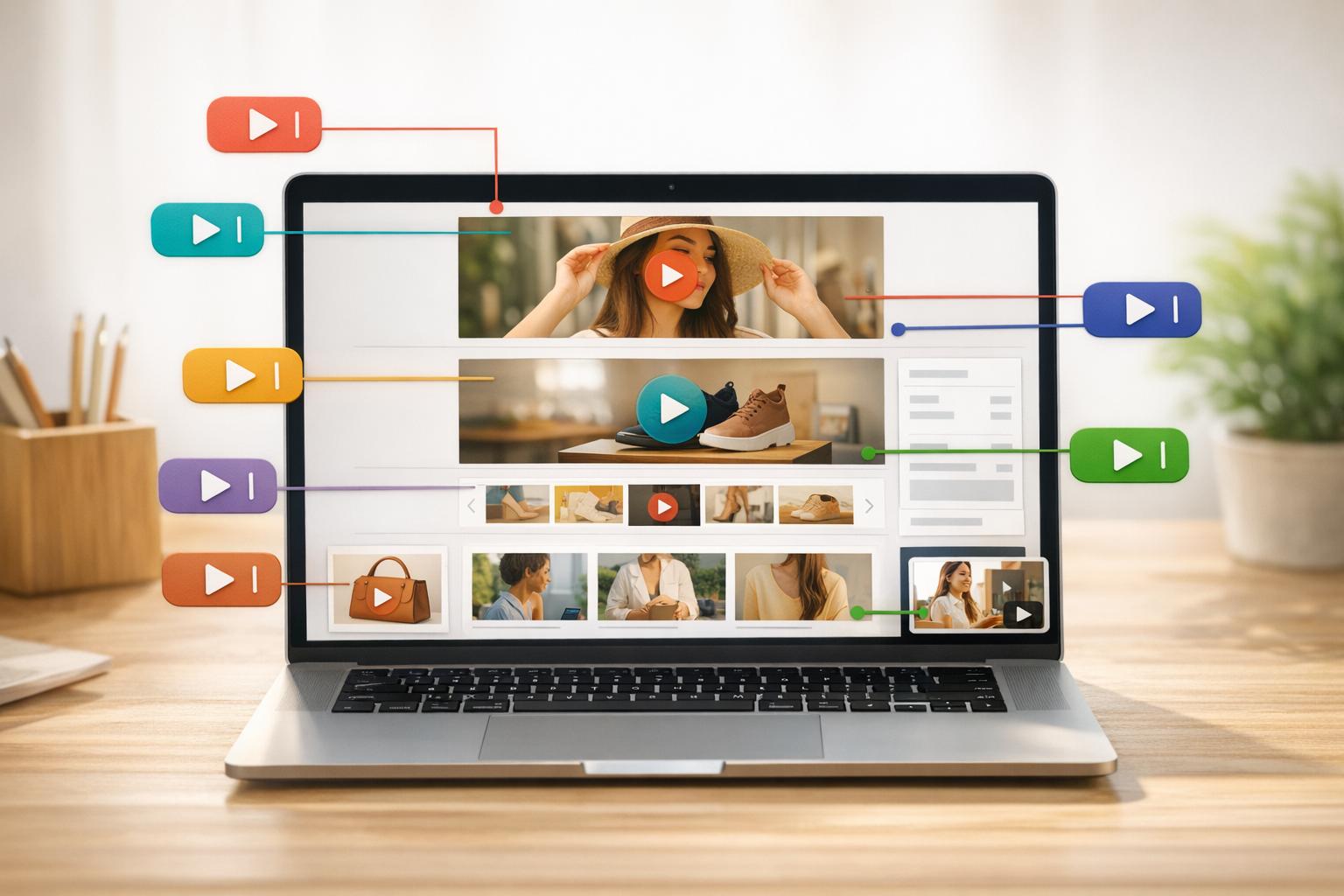
Adding shoppable videos to your Shopify store is hassle-free and requires no coding. Apps like UWidget integrate directly with your Shopify Admin, letting you import content by simply pasting URLs from platforms like YouTube, TikTok, or Instagram. These videos can be embedded in multiple formats - carousel sliders, video grids, sticky players, or banners - on product pages, collections, or your homepage. To maintain fast page loading speeds, modern widgets use lazy-loading, ensuring videos load only when customers scroll to them. The built-in "Add to Cart" button makes the checkout process smooth and efficient.
Key Benefits of AI Shoppable Videos
AI shoppable videos don’t just streamline the buying process - they also deliver results that can directly impact your revenue. These videos are proven to drive higher conversion rates, with 9x higher purchase intent compared to standard videos. Even more impressive, 41% of viewers complete a purchase after watching a shoppable video.
Higher Conversion Rates and Purchase Intent
Shoppable videos remove obstacles in the buying journey by allowing viewers to purchase products directly within the video. This seamless experience ensures you capture their attention and interest at the perfect moment. For example, when Fashion Floor introduced shoppable videos to their Shopify store, their conversions jumped by 33% in just 30 days. Similarly, a fast-growing D2C brand tested shoppable videos across 29 SKUs for a month and saw an 82.56% boost in conversion rates, resulting in 478 additional units sold that would have otherwise been missed with static content.
Not only do these videos drive purchases, but they also keep viewers engaged. Completion rates for shoppable videos can reach as high as 90%, highlighting their ability to hold attention while encouraging action.
Fewer Returns with AI Try-On Features
Reducing returns is another major win for online retailers. Returns are a costly problem, with 19% of online purchases expected to be returned in 2025. AI-powered virtual try-on tools help tackle this issue by giving shoppers a clearer idea of how products will fit and feel. When customers use 3D and AR features, they’re 44% more likely to add items to their cart and 65% more likely to complete a purchase.
Some brands are already seeing the benefits of this technology. Rebecca Minkoff added 3D media and AR visualization to their online store in 2024, and according to CEO Uri Minkoff, these tools improved customer understanding of product quality and sizing - leading to significant conversion increases. Similarly, Balmain partnered with Bods to create a virtual fitting room where customers could use personalized avatars to see how garments fit and moved in real time.
"3D media makes for a much more interactive shopping experience. Customers can examine our products from every angle... which helps them get a better sense of quality, size, and other details that matter."
- Uri Minkoff, Cofounder and CEO, Rebecca Minkoff
Increased Revenue through Video Commerce
The revenue potential of shoppable videos goes far beyond individual sales. Ieva Jasiuvenaite, Founder & CEO of an ecommerce brand, shared that over 50% of her company’s total revenue was directly influenced by shoppable video, with a 40% increase in conversion rates. Live video shopping, in particular, has been shown to drive 49% higher average order values, making it an effective way to increase transaction sizes.
Impulse buying also plays a key role here. When customers can act immediately by clicking product tags, they’re less likely to second-guess their decision or abandon their cart. In fact, landing pages with video can increase conversions by up to 80% while also boosting organic reach through higher shares.
sbb-itb-d9e5b3a
How to Add AI Shoppable Videos to Your Shopify Store
Adding AI-powered shoppable videos to your Shopify store is a quick and straightforward process. In fact, Stylelist Israel demonstrated how to sync TikTok content to product pages in just 10 minutes back in December 2025 - all without slowing down their mobile site. Ready to get started? Here’s what to do.
Install an AI Shoppable Video App
The first step is to find the right app in the Shopify App Store. A popular choice is UWidget, which integrates with YouTube and Shorts. Plans start at just $5.99/month, and they offer a 7-day free trial so you can test it out before committing. Simply click “Add app” and confirm the installation through your Shopify Admin.
Once installed, you’ll have access to pre-built templates, or you can create a custom video feed from scratch. Import content from platforms like YouTube, TikTok, or Instagram - or use AI Studio to turn static product photos into engaging videos. To make these videos shoppable, tag your products and enable the "Add to Cart" feature.
After setup, move on to customizing your videos to fit your store’s look and feel.
Customize and Embed Your Videos
Tailor your video widgets to align with your store’s branding. Use the app’s built-in settings or add custom CSS for more advanced tweaks. Embed these videos on high-traffic pages such as your homepage or product pages. Popular formats include video galleries, carousel sliders, grids, sticky video players, or even video banners.
For mobile shoppers - who now dominate online traffic - focus on vertical or square video formats that make the most of smaller screens. Keep your videos concise (1-2 minutes is ideal) to hold attention, and include clear calls-to-action like “Shop Now” or “Add to Cart” after showcasing a product.
Once your videos are live, it’s time to track their performance and refine your approach.
Track Performance and Make Improvements
Measure success by monitoring direct sales from video-linked cart additions. Additionally, track influenced sales, which refers to purchases made during the same session after watching at least five seconds of a video [30, 31].
Use "Top Pages" reports to identify areas with high engagement, and consider relocating video widgets to these prime spots. Review "Top Videos" reports to see which content types - like styling tips or product reviews - drive the most revenue. Build more content that mirrors these successful themes. If your audience skews mobile, prioritize vertical “Shorts”-style videos and sticky players for better results.
For example, Rojaprofessional.de saw over 50% of their total revenue influenced by shoppable videos and achieved a 40% boost in conversion rates. These insights show just how impactful this strategy can be when done right.
Comparison: Static Images vs. AI Shoppable Videos
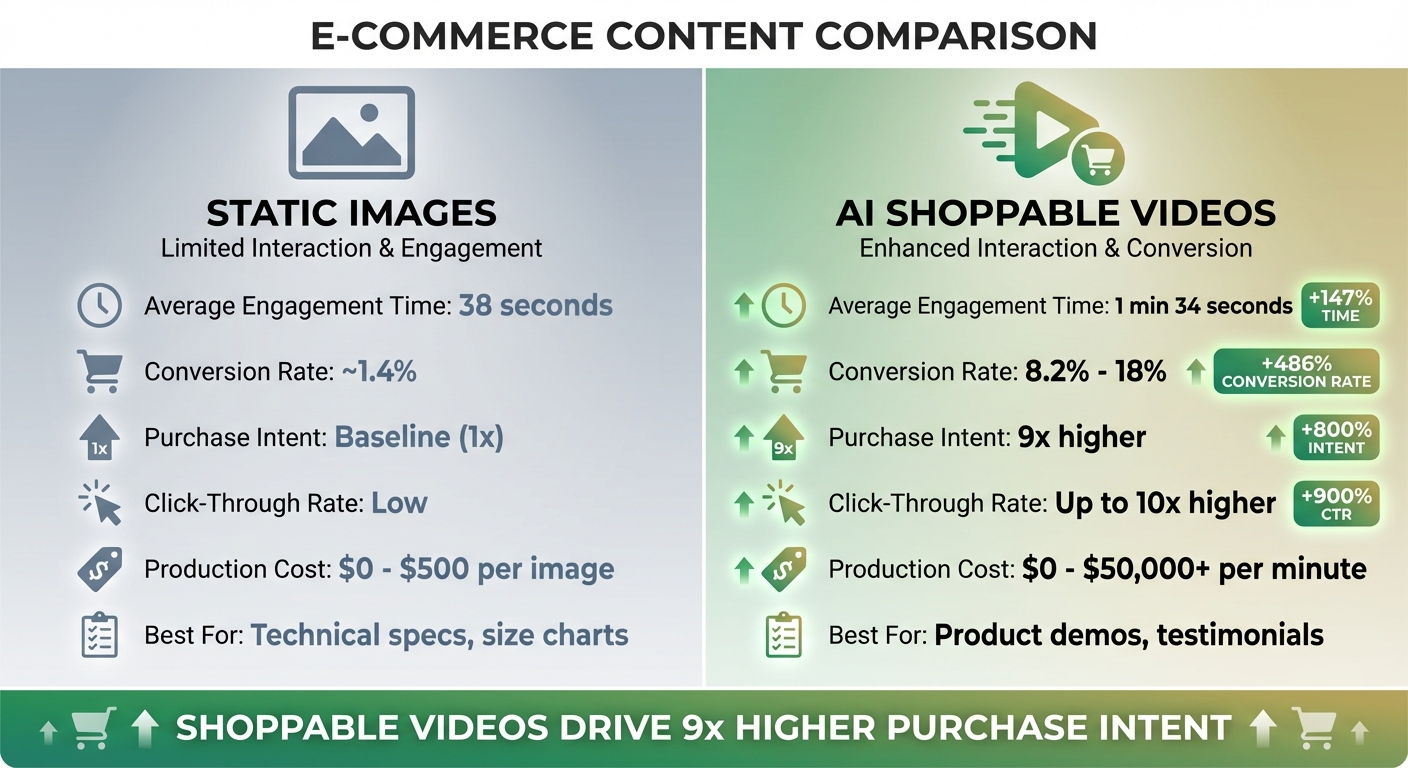
Static Images vs AI Shoppable Videos: Conversion Rate Comparison
When it comes to showcasing products, the difference between static images and AI shoppable videos is striking. Static images might load quickly, but they struggle to hold attention. On average, people engage with static content for just 38 seconds, compared to a more impressive 1 minute and 34 seconds for shoppable videos. This extended engagement time translates into more opportunities to convert viewers into buyers.
The numbers speak for themselves: static images have an average conversion rate of about 1.4%, while shoppable videos can reach rates as high as 8.2%. This gap has a direct impact on revenue, as seen with brands like Tortuga Backpacks, which saw a 14% boost in product page performance after incorporating video content.
Comparison Table
| Metric | Static Images | AI Shoppable Videos |
|---|---|---|
| Average Engagement Time | 38 seconds | 1 minute 34 seconds |
| Conversion Rate | ~1.4% (Shopify avg.) | 8.2% to 18% |
| Purchase Intent | Baseline | 9x higher |
| Click-Through Rate | Low | Up to 10x higher |
| Production Cost | $0 – $500 per image | $0 – $50,000+ per minute |
| Ideal Use | Technical specs, size charts | Product demos, testimonials |
The advantages of shoppable videos go beyond just numbers. While static images are still useful for presenting straightforward details like size charts or technical specs, shoppable videos excel at delivering dynamic and engaging product demonstrations. They’re particularly effective for showcasing items like beauty products, gadgets, and apparel, where seeing the product in action can make all the difference.
For the best results, consider a hybrid approach. Use shoppable videos for products that benefit from visual storytelling and demonstrations, and rely on static images for quick-reference details. This strategy allows you to leverage the power of video, which can achieve click-through rates up to 10 times higher than static images, while still providing the practicality of static content where needed.
Conclusion
AI shoppable videos tackle a major hurdle for Shopify stores: turning casual browsers into paying customers. By transforming the buying process into a seamless experience, these videos let customers see a product, desire it, and make a purchase - all without leaving the video. In fact, 89% of viewers make a purchase after watching a video, and ecommerce sites experience a 34% boost in conversions when they use video content.
This evolution from static images to interactive videos isn’t just about keeping up with trends - it’s about meeting customers where they’re most engaged. With purchase intent being nine times higher for shoppable videos compared to traditional content, the potential impact on sales is hard to ignore. These videos align perfectly with the growing demand for interactive and engaging shopping experiences.
Getting started is straightforward. With tools like UWidget, you can quickly turn your existing YouTube videos or Shorts into shoppable content.
Place these videos in high-traffic areas of your site, monitor metrics like click-through rates and video-to-cart conversions, and adjust your strategy based on performance. Whether you’re highlighting product demos, customer reviews, or tutorials, shoppable videos offer a streamlined way to build trust, reduce barriers, and drive sales. It’s a simple yet effective method to elevate your store’s performance.
FAQs
How do AI-powered shoppable videos drive better conversion rates than static images?
Shoppable videos powered by AI are transforming how customers shop online, offering a dynamic and interactive experience that leaves static images far behind. To put it into perspective, while traditional image-based content typically converts at an average rate of 1.4%, shoppable videos can push that number up to an impressive 8.2% - an 80% jump in effectiveness.
These videos combine eye-catching visuals with clickable product links, making it easier for viewers to explore and purchase items directly. This seamless shopping journey not only grabs attention but also simplifies decision-making, encouraging quicker purchases. For Shopify store owners, this means turning passive viewers into active buyers, boosting sales, and creating a more satisfying shopping experience for customers.
How do AI-powered try-on features in shoppable videos improve conversions?
AI-powered try-on tools in shoppable videos are transforming the way people shop online. They let customers virtually see how a product - like clothing, glasses, or makeup - might look on them before they commit to buying. This interactive element does more than just entertain; it keeps shoppers engaged, lowers uncertainty, and makes the experience feel more tailored to their needs.
By offering a way to visualize products in real-time, these features help shoppers feel more confident about their choices. The result? More completed purchases and happier customers.
How can I add AI-powered shoppable videos to my Shopify store?
To bring AI-powered shoppable videos into your Shopify store, start by creating a video using an AI platform. Upload your product images, descriptions, and pricing (for example, $49.99), and the AI will craft a video that highlights your products along with their key details.
Once your video is ready, enhance it with clickable hotspots, like "Buy Now" buttons. Link these directly to the relevant Shopify product pages so customers can shop instantly. To embed the video into your store, use the UWidget: YouTube Widgets app by Fractal Apps. Paste the video URL into the app, select a display format that complements your store's theme, and position it on a specific page, such as your homepage or individual product pages.
Before going live, test the video to make sure all clickable elements work properly. Use Shopify analytics to monitor its performance and see how it impacts customer engagement and conversions.