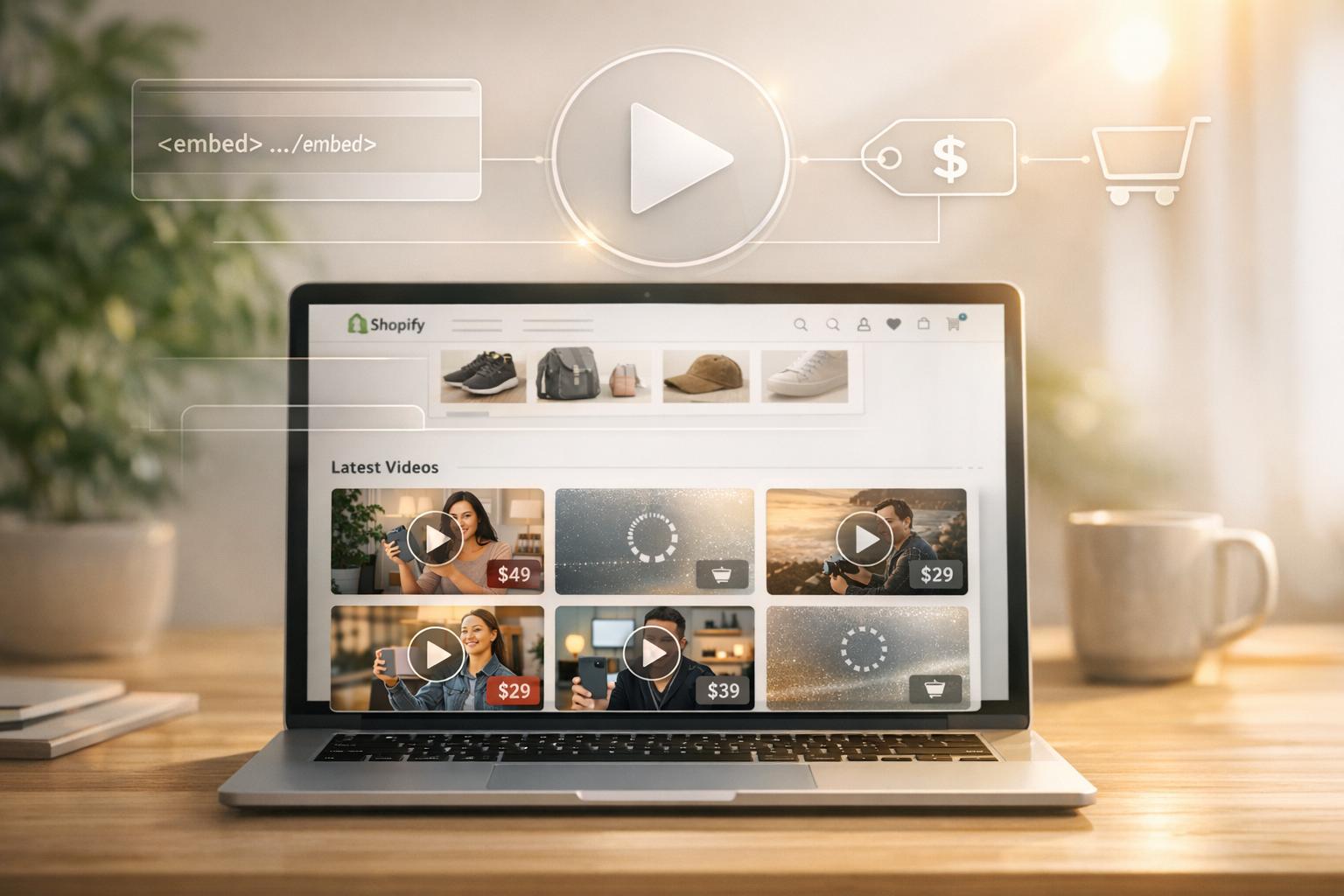
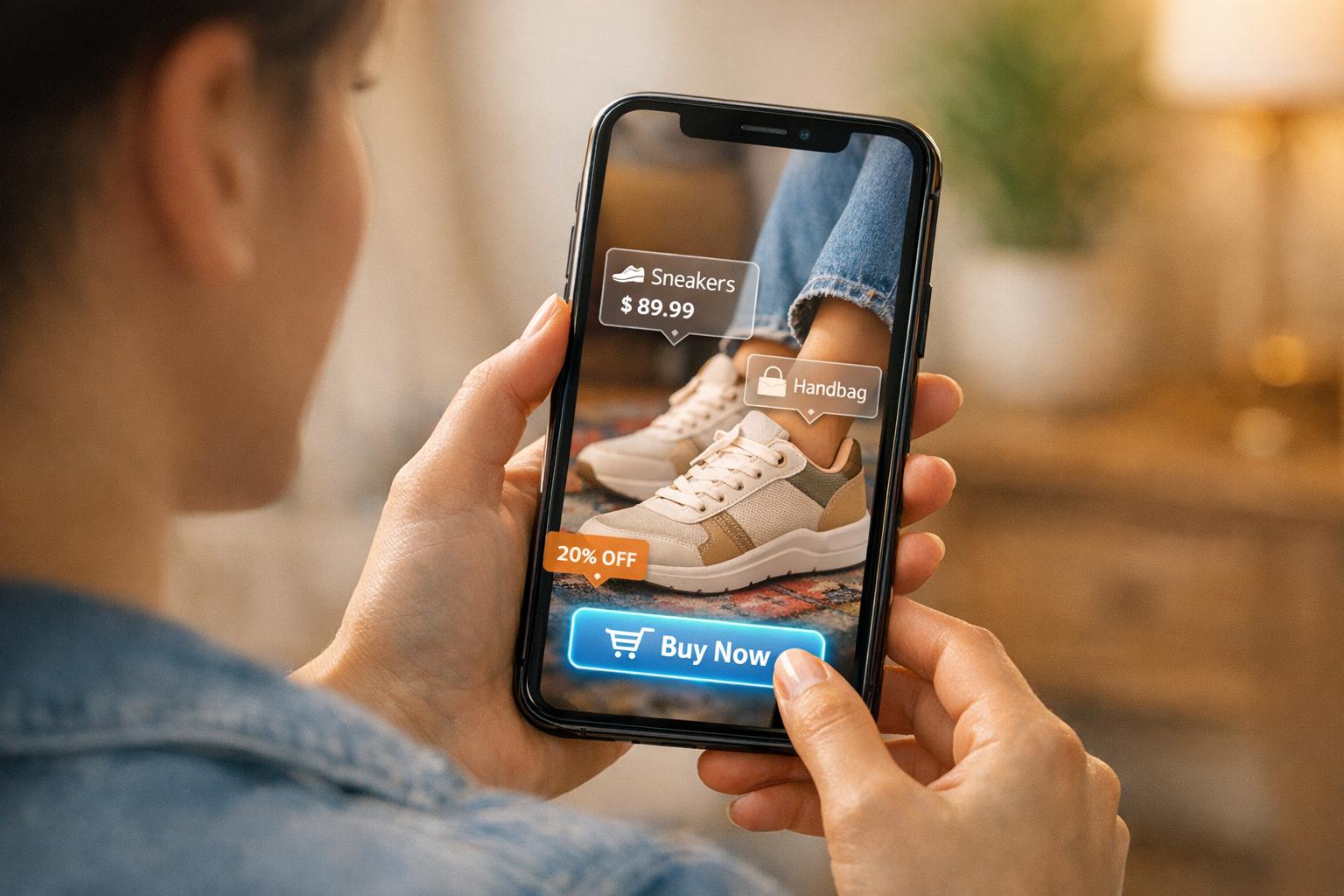
Shoppable video ads make it easier for customers to buy products directly from videos, boosting conversions and reducing shopping friction. With platforms like TikTok, Instagram, YouTube, and Pinterest offering unique ad formats, businesses can experiment to find what works best for their audience. Here’s a quick breakdown of 10 ad formats to consider:
- TikTok In-Feed Shoppable Video Ads: Seamless, full-screen vertical videos with high engagement and in-app checkout.
- Instagram Shoppable Carousel Ads: Interactive ads with multiple images/videos and product tags.
- YouTube Shoppable Video Overlays: Clickable video ads with product feeds and call-to-action buttons.
- Instagram & YouTube Reels/Shorts: Short, scrollable videos with product tags for quick buying decisions.
- Live-Stream Shopping Videos: Real-time product demos with direct purchasing options.
- Pre-Recorded Interactive Website Videos: Embedded videos with clickable hotspots for direct shopping.
- Pinterest Shoppable Video Pins: Search-driven video ads targeting users ready to buy.
- Facebook Dynamic Product Video Ads: Personalized ads based on user behavior, optimizing for conversions.
- Shoppable Video Ads with End-Screen CTAs: Persuasive calls-to-action at the end of videos.
- AR-Enhanced Shoppable Video Ads: Interactive videos with virtual try-on or 3D product views.
Each format offers unique benefits, from engaging Gen Z on TikTok to leveraging Pinterest’s search-driven audience. Shopify users can enhance these formats with tools like UWidget to embed shoppable videos directly on their sites.
Quick Comparison:
| Ad Format | Best For | Platform | Key Features |
|---|---|---|---|
| TikTok In-Feed Ads | Impulse buys, Gen Z | TikTok | Vertical videos, in-app checkout |
| Instagram Carousel Ads | Multi-product showcases | Up to 10 images/videos, product tags | |
| YouTube Overlays | Discovery, retargeting | YouTube | Clickable overlays, product feeds |
| Reels/Shorts | Viral reach, quick buys | Instagram, YouTube | Short, scrollable videos |
| Live-Stream Shopping | Urgency-driven offers | TikTok, YouTube | Real-time demos, Q&A |
| Interactive Website Videos | Product pages, reducing bounce rates | Website (Shopify) | Clickable hotspots, embedded videos |
| Pinterest Video Pins | Search-driven shoppers | Video ads in product catalogs | |
| Facebook Dynamic Video Ads | Retargeting, personalization | Facebook, Instagram | Personalized, behavior-based content |
| End-Screen CTAs | Driving conversions | YouTube, Instagram | Persuasive CTAs at video end |
| AR-Enhanced Videos | Visual-heavy products | Instagram, Facebook | Virtual try-on, 3D models |
Testing these formats can help businesses find the right mix to drive sales and engagement. For Shopify users, tools like UWidget simplify embedding shoppable videos, creating a smoother shopping experience.
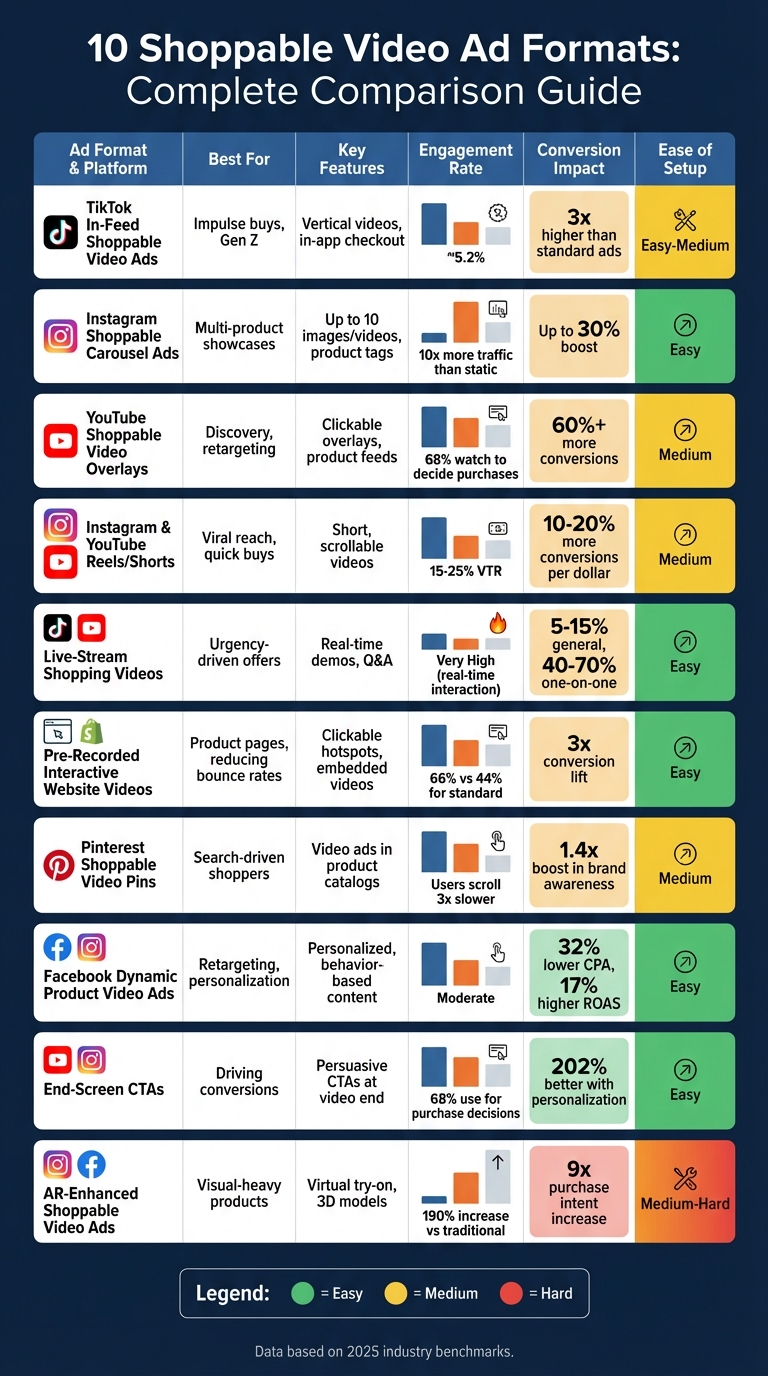
10 Shoppable Video Ad Formats Comparison: Platforms, Engagement & Conversion Rates
What’s New in Google Ads: Veo, Product Studio, Shoppable YouTube Ads
sbb-itb-d9e5b3a
1. TikTok In-Feed Shoppable Video Ads
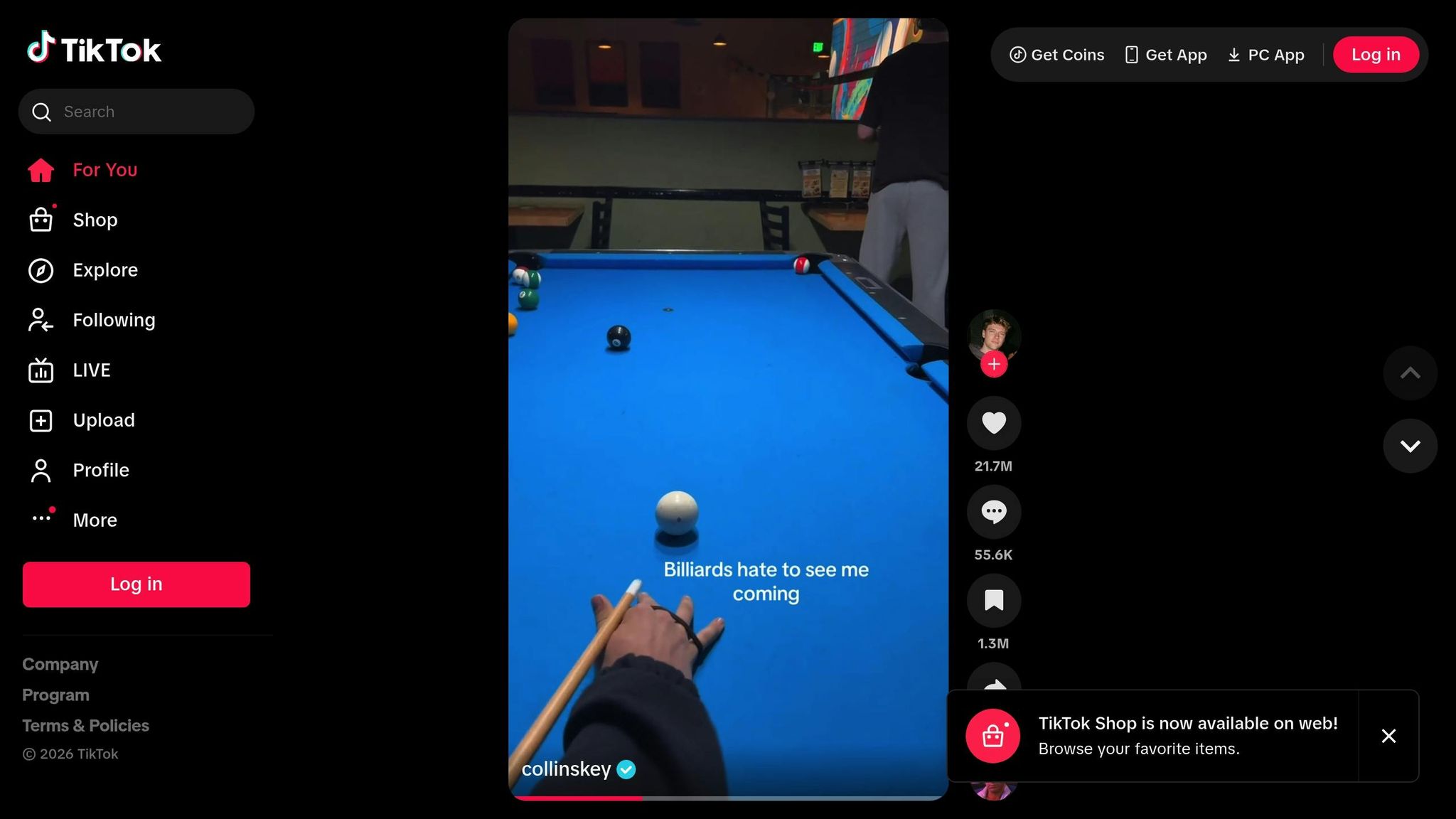
TikTok In-Feed Shoppable Video Ads appear as full-screen vertical videos in users' "For You" feeds, blending so well with organic content that they often don't feel like ads. This seamless approach leads to higher engagement rates. With TikTok's in-app checkout, customers can complete purchases without leaving the app, reducing the chances of abandoning their carts.
In the first half of 2025, TikTok Shop generated $26 billion in GMV, with U.S. sales growing by 120% year-over-year. These shoppable video ads deliver conversion rates three times higher than standard ads, and 58% of TikTok users make purchases directly on the platform. Even more impressive, 67% of users report buying something after seeing it on TikTok.
Platform Compatibility
For Shopify store owners, TikTok simplifies integration with direct catalog syncing through the official TikTok app. Since July 2025, GMV Max has become the default campaign type for TikTok Shop Ads, optimizing for both ROI and gross merchandise value. To get started, connect your TikTok Shop via Seller Center, Business Center, or Ads Manager. Then, choose the "Sales" objective and set TikTok Shop as your product source. Merchants can include up to 20 products and 50 videos per ad group.
If you're a Shopify merchant aiming to streamline sales, tools from Fractal Apps: Exclusive Shopify Apps can also help improve engagement and increase conversions.
Engagement Potential
TikTok’s algorithm is brilliant at putting products in front of users who didn’t even know they wanted them. In fact, 71.2% of shoppers say they’re inspired to shop after stumbling upon interesting feed content. Ads that mimic authentic, user-generated clips tend to perform better than overly polished videos. Since these ads look like regular posts, they naturally accumulate social proof through likes, comments, and shares.
"TikTok users discover products while they're already entertained. The product appears in context - someone using it, demonstrating it, or making it part of a story. That context drives the purchase decision."
– July Cintra
This organic engagement often translates into stronger conversion rates.
Conversion Lift Potential
Nearly half of TikTok shoppers make a purchase every month. TikTok's Value-Based Optimization ensures ads are shown to users who are most likely to generate maximum revenue and return on ad spend. The Beauty and Personal Care category leads the way, accounting for 79.3% of U.S. TikTok Shop sales.
Ease of Implementation
To create effective ads, start with a 2-second hook, follow with an 8-second product demo, and end with a clear "Tap to Shop" call-to-action. Keep videos between 15 and 30 seconds long. Publishing 5–7 new shoppable video variations each week keeps your content fresh and avoids creative fatigue. Running ads for at least 7 days allows TikTok’s algorithm to optimize their performance. TikTok charges about 6% commission on orders placed through TikTok Shop.
2. Instagram Shoppable Carousel Ads
Instagram Shoppable Carousel Ads offer a dynamic way to combine eye-catching visuals with interactive shopping features. This ad format allows you to include up to 10 images or videos, each equipped with product tags, pricing details, and a "Shop Now" button. The best part? Users can explore or purchase items without ever leaving Instagram. With 70% of Instagram's two billion monthly active users already engaging with Instagram Shopping, these carousel ads are a natural fit for reaching shoppers where they’re already browsing.
What sets this format apart is its ability to include video cards that auto-play and loop, making them more engaging than static images. For example, in February 2025, Mansur Gavriel - a luxury accessories brand - used Instagram Story carousel ads to showcase four new bags (the Flores, Everyday Soft Tote, Baci, and Swing). Each bag had its own product card linking directly to its shopping page. Similarly, sustainable jewelry brand Linjer ran Stories ads featuring close-ups of their products with a "20% Off Sitewide" message, driving conversions effectively.
Platform Compatibility
Shopify merchants can easily integrate their product catalogs through Meta's Commerce Manager. These carousel ads are versatile, running seamlessly across Instagram Feed, Explore, and Stories placements. For Stories, it’s best to use a 9:16 aspect ratio for a full-screen experience, while Feed placements require square images with a minimum resolution of 600×600 pixels. Keep in mind that every card in the carousel must feature at least one product tag for the ad to be eligible. This seamless integration ensures a smooth user experience and maximizes engagement.
Engagement Potential
Carousel ads are designed to encourage users to swipe through multiple slides, keeping them engaged with your brand for longer. They’re particularly effective for industries like fashion, beauty, and home decor, where high-quality visuals and tutorials naturally captivate viewers . Mixing still photography with short video clips (up to 60 seconds for Feed and 120 seconds for Stories) is a great way to showcase products in action while also offering detailed static views . Including user-generated content, such as reviews or try-on videos, can further enhance trust and relatability. This extended engagement often translates into higher conversion rates.
Conversion Lift Potential
Video content is a powerful tool for driving purchases. Visitors are 2.5 times more likely to buy after watching a product video, and brands incorporating video widgets into their ads see conversion rates triple. Carousel formats, with their storytelling potential, can boost conversions by up to 30%. Adding elements like discount codes - such as "SAVE10" - directly into the carousel can provide that extra push to convert hesitant buyers. Plus, with Instagram's in-app checkout, the buying process is streamlined, reducing cart abandonment and improving overall sales.
Ease of Implementation
Setting up Instagram Shoppable Carousel Ads is straightforward. You can either boost an existing shoppable post or create a new ad through Meta Ads Manager. If all carousel cards are tagged, you can even promote the post directly from the Instagram app by hitting the "Promote" button. For Shopify users, apps like UWidget (starting at $5.99/month for the Starter plan) simplify the process further by allowing you to import Instagram Reels or TikTok videos into shoppable carousels with just one click. Supported ad objectives include Awareness, Traffic, Engagement, Leads, and Sales.
3. YouTube Shoppable Video Overlays
YouTube Shoppable Video Overlays bring a new level of interactivity to video ads, turning them into dynamic, clickable storefronts. By connecting your Google Merchant Center product feed to Video Action or Demand Gen campaigns, these overlays allow viewers to shop directly from the video. Features like call-to-action buttons (e.g., "Shop now" or "Get a quote"), auto-generated end screens, and product carousels make the shopping experience seamless. Considering that 68% of YouTube users watch videos to help make purchase decisions, this format taps into YouTube’s massive audience. As of early 2025, YouTube has led in streaming watch time in the U.S. for over two years. This makes it an ideal platform for bridging passive video consumption with active shopping.
A standout feature introduced in 2025 is Connected TV (CTV) integration. Viewers can browse products on their TV screens using a remote-controlled carousel and complete purchases by scanning a QR code with their mobile device. This innovation connects the traditional TV viewing experience with modern e-commerce.
Platform Compatibility
YouTube overlays are designed to work across mobile, desktop, and Connected TV. On mobile, they appear as expandable panels, while on TV, they take the form of interactive carousels. To use this feature, ensure your product feed includes at least four items with image aspect ratios between 0.6 and 1.4. If you’re not part of the YouTube Partner Program, tools like UWidget (starting at $5.99/month) allow you to embed shoppable YouTube videos directly onto your storefront by tagging products and pasting the video URL.
Engagement Potential
These overlays transform passive viewers into active shoppers, boosting purchase intent by up to 9x. Interactive features, such as clickable hotspots on mobile and remote-controlled browsing on Connected TV, keep audiences engaged longer than standard video ads. For instance, in 2025, the brand Ava Estell used shoppable video strategies to streamline the customer journey, achieving a 23% engagement rate and a 21% conversion rate. This effort resulted in an additional $743,000 in revenue. Shopify merchants can emulate such results by using these overlays to target specific audiences and enhance conversions. Additionally, Demand Gen campaigns make it easy to retarget users, such as those who viewed certain product pages, with YouTube Shorts ads featuring those exact items.
Conversion Lift Potential
The increased engagement from shoppable overlays often translates into higher conversions. Advertisers using product feeds in Video Action campaigns have reported over 60% more conversions at a lower cost compared to ads without them. Furthermore, 41% of viewers make a purchase after watching a shoppable video. Don’t overlook view-through conversions - purchases made after watching an ad without clicking on it - which can make up 30% to 50% of total conversions for YouTube video ads. As Dataslayer Guide explains:
"If you only measure click-based conversions, you're undercounting YouTube video performance by 30-50%."
Ease of Implementation
Getting started is straightforward. Link your Google Merchant Center account to Google Ads and allow 3–5 days for product feed approval. To maximize results, create vertical videos (15–30 seconds) specifically for YouTube Shorts instead of reusing horizontal content. Use action-oriented CTAs at key moments in the video to increase conversions by up to 202%.
4. Instagram and YouTube Shoppable Reels/Shorts
Reels on Instagram and Shorts on YouTube take interactive shopping to the next level, offering a fast-paced, scrollable way to shop. These short videos aren’t just entertaining - they’re powerful sales tools. On Instagram, you can tag up to five products in a single Reel, while YouTube requires you to join the YouTube Partner Program and connect a store to enable shoppable features. Both platforms rely on continuous scroll algorithms to push your videos to a broader audience, even those who don’t follow you yet. The shopping process is straightforward: viewers can tap on product tags, add items to their cart, and complete their purchase - all without leaving the video.
Platform Compatibility
Both Instagram and YouTube have built-in compatibility for shoppable content, and they integrate seamlessly with tools like Shopify. Instagram lets approved accounts tag products directly in Reels. On YouTube, you’ll need to connect your Google Merchant Center account through Google Ads. Apps like UWidget (starting at $5.99/month) make it easy to create shoppable widgets by simply pasting a YouTube URL. If speed is a factor, Instagram’s setup process typically moves faster than YouTube’s approval timeline.
Engagement Potential
Short-form videos consistently drive more engagement than static images. In fact, people are 51% more likely to share video content than photos, and viewers are 2.5 times more likely to buy something after watching a product-focused video. Take Frankies Bikinis, for example: the brand used shoppable Instagram content to generate 19% of its total orders and over 23% of its online revenue. Similarly, MICHI, a women’s fashion brand, saw a staggering 51x return on investment within just 30 days of using shoppable Instagram features.
The secret? Featuring real people - whether they’re customers, influencers, or employees - showing off products in relatable ways. Quick styling tips or tutorials often resonate more than overly polished ads. Unlike longer videos, Reels and Shorts grab attention instantly, making them a perfect fit for today’s fast-scrolling audience.
Conversion Lift Potential
Shoppable Reels and Shorts aren’t just about engagement - they drive real results. Using embedded shoppable widgets can triple conversion rates. Adding shoppable galleries to your website can boost conversions by 161% and deliver a click-through rate four times higher than standard setups. On YouTube, campaigns that integrate product feeds with Video Action ads see over 60% more conversions at a lower cost compared to ads without product feeds. Highlighting the impact of user-generated content, the Director of Ecommerce at Lack of Color shared:
"Foursixty seamlessly integrates user-generated content, which has significantly boosted engagement and trust with our customers."
Ease of Implementation
Getting started is simple. On Instagram, connect your product catalog and tag items directly in your Reels. For YouTube, link your Google Merchant Center account and include products in your Video Action or Demand Gen campaigns. Focus on creating vertical videos (15–30 seconds) with a compelling opening to hook viewers quickly. Avoid reusing horizontal content - it doesn’t perform as well in these formats. Place product tags early in the video to encourage impulse clicks. For maximum impact, embed these videos near the "Add to Cart" button on your product pages to reassure shoppers and drive conversions.
5. Live-Stream Shopping Videos
Live-stream shopping takes the old-school home-shopping experience and gives it a modern twist for social media. With this format, viewers can watch hosts demonstrate products, ask questions in real time, and even make purchases - all without leaving the live stream. The US live ecommerce market is expected to reach $67.8 billion by 2026, making up over 5% of all ecommerce sales. On top of that, 14% of US adults have already made purchases during live shopping events, and 42% describe the format as "fun". This interactive setup encourages immediate buying decisions in a way that static videos simply can't.
Platform Compatibility
Different platforms cater to specific audiences and product types:
- TikTok Shop: A favorite among Gen Z and Millennials, TikTok Shop charges a 5% commission on sales with no upfront costs.
- YouTube Shopping: Best for educational content and product demonstrations, but you'll need to be part of the YouTube Partner Program to use it.
- Amazon Live: Ideal for shoppers already in a buying mindset, but it's limited to US sellers who are part of Amazon's Brand Registry.
- Immerss: Designed for high-ticket items, this platform supports one-on-one video consultations with conversion rates ranging from 40% to 70%. Plans start at $800 per month.
Engagement Potential
Live shopping events create a sense of urgency that pre-recorded videos just can't replicate. For instance, sofa company Snug teamed up with comedian Katherine Ryan for a live event that attracted more than 6,000 viewers. The result? A 160% increase in virtual consultation bookings and a 450% spike in sales. Similarly, Canvas Beauty founder Stormi Steele hosted a TikTok Live session that brought in $1 million in sales within six hours by offering behind-the-scenes content and answering audience questions live.
The host plays a critical role in these events. Whether it's a founder providing a personal touch, a creator bringing high energy, or an expert explaining technical products, the right host can make all the difference.
Conversion Lift Potential
Live-stream shopping can deliver impressive conversion rates. General live events convert at rates between 5% and 15%, while one-on-one consultations can achieve rates as high as 40% to 70%. For example, eco-friendly brand Tru Earth saw a 20% boost in conversions during a live product launch. Ryan McKenzie, the company's cofounder, shared:
"We saw a 20% increase in conversions during a recent product launch. The live shopping event contributed to a significant chunk of the revenue for the day."
To drive even more conversions, consider offering exclusive "live-only" deals or discount codes that expire as soon as the stream ends. Lidl, for instance, ran a TikTok promotion where they sold a fitness set worth around $40 for just $7. With only 3,000 bundles available, the scarcity created a rush of immediate sales.
Ease of Implementation
Getting started with live-stream shopping doesn't have to be complicated. Begin with a selection of up to 10 products and avoid launching during high-pressure shopping periods like Black Friday. Ensure a stable internet connection - at least 10 Mbps (or 25 Mbps for HD) - and use a hardwired Ethernet setup for reliability. Structure your event with a short demo, an interactive Q&A session, and clear calls-to-action like countdown timers or low-stock alerts.
After your stream, repurpose the best moments into Shorts or Reels using AI tools to extend the content's reach without additional filming. If you're running a Shopify store, tools like UWidget (starting at $5.99/month) make it easy to embed shoppable YouTube livestreams directly on your site, so customers can watch and shop without leaving your page. Live-stream shopping is another dynamic option to explore alongside other shoppable video formats.
6. Pre-Recorded Interactive Website Videos
Pre-recorded interactive website videos take ordinary video files and add extra features like clickable hotspots, product tags, and "Add to Cart" buttons. These enhancements allow viewers to shop directly within the video player without leaving your site. Unlike social media videos that require multiple steps to find and purchase products, these videos are embedded directly on your Shopify store. Shoppers can watch demos or testimonials and instantly add items to their cart. Unlike other formats that redirect users to external platforms, these videos keep everything on your site, creating a smoother shopping experience.
Platform Compatibility
To maintain their interactive features, these videos must be embedded on your website, as external uploads remove the clickable elements. For Shopify merchants, tools like UWidget (starting at $5.99/month) make it easy to import YouTube videos and layer them with shoppable features. You can display these videos in various formats, such as galleries, carousel sliders, or sticky players that follow users as they scroll. With seamless integration, these videos not only perform well but also grab attention.
Engagement Potential
Interactive videos are far more engaging than traditional ones, boasting a 66% engagement rate compared to 44% for standard linear videos. Clickable product cards turn passive viewers into active shoppers. For instance, Spread The Love saw a 250% increase in time spent on their site by utilizing video engagement tools. Similarly, Frankies Bikinis embedded shoppable user-generated content galleries on their site, which contributed to 19% of total orders and over 23% of online revenue. Adam Hayes, Head of Content at Wyzowl, sums it up well:
"The idea is simple: stop sending your video viewers to home pages, ambiguous product pages, and making them do the donkey work of finding the stuff they just saw in your video."
Conversion Lift Potential
Higher engagement leads to better conversions. By reducing the steps between product discovery and checkout, interactive videos lower the chances of customers abandoning their carts. Websites with video content see an average 4.8% conversion rate, compared to just 2.9% for those without videos. For example, Natori experienced a 141% increase in conversion rates after adopting interactive video commerce.
Ease of Implementation
You don’t need advanced technical skills to get started. Many Shopify apps offer drag-and-drop editors that allow you to import existing social media videos and add product tags in just a few minutes. Plan for editable hotspots during video production to ensure key visuals remain clear. Use text tags or visual prompts to indicate clickable elements within the video. Since most users will view the content on mobile devices, make sure your video player is mobile-friendly and touch-responsive. After launching, track metrics like watch time, completion rates, and average order value to gauge success.
7. Pinterest Shoppable Video Pins
Pinterest offers a fresh take on shoppable video ads, blending its focus on search and discovery with engaging shopping experiences. With 482 million monthly users, 42% of whom are Gen Z, Pinterest Shoppable Video Pins transform product videos into clickable shopping opportunities. Unlike platforms geared toward casual scrolling, Pinterest attracts users who are actively looking to buy. Its Video Shopping Ads allow merchants to embed video clips directly into their product catalogs, creating seamless shoppable ads. Advertisers can choose between vertical formats or max-width video ads that take over the mobile feed for greater visibility.
Platform Compatibility
Pinterest sits at the crossroads of search, social interaction, and e-commerce, making it an excellent choice for full-funnel marketing efforts. Shopify merchants can sync their product catalogs with Pinterest, unlocking shoppable features, while the platform's mobile-first design ensures vertical content performs well. Pinterest users scroll three times slower than on other social platforms, leading to stronger brand recall and deeper engagement. This combination makes Pinterest a standout option for advertisers aiming to connect with shoppers in a meaningful way.
Engagement Potential
Pinterest’s unique user behavior fuels high engagement levels. Weekly Pinterest shoppers spend 40% more per month compared to users on other platforms. For example, in 2022, snack brand Graze used short (6–15 second) video ads to target Dutch consumers, achieving a 183% increase in Pin awareness among Gen Z. Similarly, Louis Vuitton’s optical illusion campaign in France reached over 3.5 million users. Sibylle Tretera from Pinterest Business captured the essence of this approach:
"Video content on Pinterest isn't about fleeting entertainment; it's about engagement, inspiration and moving from discovery to action."
Conversion Lift Potential
Using multiple video formats on Pinterest can amplify results. Advertisers see a 1.4× boost in brand awareness and favorability, while multi-format campaigns increase brand recall and action intent by 1.2×. A 2023 campaign by e.l.f. for their Lash 'N Roll Mascara combined Pinterest's Premiere Spotlight ads with standard video ads, resulting in an 11% increase in video completion rates by grabbing attention within the first six seconds. Premiere Spotlight ads also delivered an 8.2× jump in aided brand awareness for participating brands.
Ease of Implementation
To maximize results, keep video lengths between 6 and 15 seconds - long enough to tell a story but short enough to hold attention. Since many users watch without sound, add clear text overlays and captions. Pair functional headlines and descriptions with a strong cover image to improve visibility in Pinterest search results. Finally, prioritize capturing attention within the first six seconds to ensure your message lands effectively.
8. Facebook Dynamic Product Video Ads
Facebook Dynamic Product Video Ads, part of the Advantage+ catalog ads suite, use personalized data to display products tailored to a user’s browsing habits and interests. By analyzing user behavior, the system decides whether to show a static image or video, optimizing for conversions. This approach, referred to as "media type liquidity", ensures the algorithm selects the most effective format for each individual viewer.
Platform Compatibility
These ads are designed to run smoothly across Facebook and Instagram Feeds, Stories, Reels, Marketplace, and the Audience Network. Given that 98.5% of Facebook users access the platform via mobile devices, vertical and square video formats are essential. For Shopify merchants, these ads automatically sync real-time product information - like pricing and availability - ensuring customers always see up-to-date details. This functionality aligns perfectly with Shopify merchants’ needs, further complemented by tools like Fractal Apps: Exclusive Shopify Apps (https://fractalapps.dev).
Engagement Potential
Video content grabs attention more effectively than static images. Experts like Dan Pantelo from Marpipe and Stephen Light, CMO at Nolah, highlight how the combination of motion and sound makes video more engaging. Meta's data supports this, showing that catalog product video ads can lead to up to 20% higher conversions compared to static images. Including captions is key, as many users watch videos with the sound off. Testing these dynamic ads can also refine audience targeting strategies, maximizing their impact.
Conversion Lift Potential
The effectiveness of this ad format is backed by real-world success stories. For example:
- Chi Chi London: Leveraging Advantage+ catalog ads with broad audience targeting, they achieved a 40% boost in sales and reduced cost per action by 29%.
- Kortni Jeane: This swimwear brand improved its conversion rate by 11% and achieved a 23× return on ad spend across 2,000 purchases.
- Allbirds: By retargeting users who clicked "Shop Now" but didn’t complete their purchase, they saw a 48% increase in purchases.
These results demonstrate the power of dynamic video ads to drive meaningful improvements in both sales and efficiency.
Ease of Implementation
Setting up these ads is straightforward, requiring:
- A product catalog
- A Meta Pixel for tracking
- Video assets tied to specific product IDs
Videos can be added via a catalog feed file (video[49].url column), the Catalog Batch API, or manually through Commerce Manager. As of September 2025, Advantage+ catalog ads automatically opt into dynamic media, displaying videos unless explicitly opted out. To maximize performance, Meta suggests aiming for at least 30% video coverage in product sets (or 20% for catalogs with 1–100 products). Videos should be under 200MB and capture attention within the first three seconds to keep viewers engaged. Shopify merchants using Fractal Apps: Exclusive Shopify Apps can further amplify their results with additional tools to boost engagement and conversions.
9. Shoppable Video Ads with End-Screen CTAs
End-screen CTAs take shoppable video ads a step further by offering a final, persuasive nudge to convert viewers who are already engaged.
These CTAs appear during the closing moments of your video, targeting viewers at their peak engagement. YouTube provides two options: Auto end screens, which are automatically generated via Google Ads, and manual end screens, which you can create in YouTube Studio.
Platform Compatibility
End-screen CTAs work seamlessly across mobile devices, desktop computers, and even connected TVs. On TV screens, viewers can tap the CTA to send a product link directly to their mobile phone, making the jump from big-screen browsing to mobile checkout smooth and efficient. Keep in mind, you can only enable one type of end screen at a time - either auto-generated through Google Ads or manually created in YouTube Studio. For manual setups, your video needs to be at least 25 seconds long.
Engagement Potential
Timing is everything when it comes to end-screen CTAs. With 68% of YouTube users turning to the platform for help with purchasing decisions, well-placed CTAs can make a big difference. Personalized messaging is especially effective - delivering 202% better results than generic alternatives. Try using direct and engaging language, such as “This one's yours - tap to shop!” to encourage clicks. To maximize impact without overwhelming viewers, include shoppable links at both the start and end of the video, but limit the total number of CTAs to two.
Boosting Conversions
Interactive features can significantly enhance results. For instance, advertisers who integrate product feeds into Video Action campaigns have seen over 60% higher conversions at a lower cost. Additionally, 42% of brands using shoppable ads have reported noticeable improvements in customer engagement. By offering a straightforward and immediate way to purchase, end-screen CTAs help address one of the biggest hurdles in online shopping: cart abandonment. With nearly 18% of shoppers abandoning their carts due to lengthy or complex checkout processes, simplicity is key.
Simple Setup
Setting up auto end screens is straightforward. Just activate them in your Google Ads campaign, and the system will automatically create the end screen based on your product catalog. Shopify users can take this a step further with tools like UWidget from Fractal Apps ($5.99/month starter plan), which allows you to embed shoppable YouTube videos directly on your store. Regardless of the method you choose, make sure your landing pages are optimized for mobile, as most retail traffic comes from mobile devices.
This strategy adds another layer to your shoppable video efforts, complementing the interactive techniques discussed earlier and providing a clear path to purchase for your audience.
10. AR-Enhanced Shoppable Video Ads
AR-enhanced shoppable videos let customers virtually "try on" products or see how items like furniture would look in their space - all directly within the video. Instead of just tapping a tag, viewers can interact with 3D models, like placing a watch on their wrist or imagining a couch in their living room, before deciding to buy. This immersive approach works especially well for industries like fashion, beauty, home goods, and automobiles, where visual details and fit are essential.
Platform Compatibility
Social platforms like Instagram and Facebook already support AR-enhanced features, and retailers such as Home Depot and Target use specialized tools to help customers make confident decisions. Platforms like YouTube and TikTok are also expanding their AR capabilities, and with the rise of 5G, streaming high-quality, interactive content is becoming seamless. For Shopify users, third-party platforms like Firework, Lyvecom, and Storyly make it easy to add AR-ready video content to their sites.
Engagement Potential
AR takes viewers from passive observers to active participants. Adding interactive video elements can boost engagement rates by up to 190% compared to traditional formats, and AR shoppable videos have been shown to increase purchase intent ninefold. However, balance is key - overloading a video with too many interactive features can distract from the shopping experience. Well-placed AR elements, on the other hand, enhance the story and keep viewers engaged. With 80% of Millennials and Gen Z discovering products via mobile apps, optimizing AR for vertical formats and smaller screens is crucial.
Conversion Lift Potential
By letting users interact with products in their own environments, AR reduces the uncertainty that often leads to abandoned carts. Businesses incorporating interactive product features into their video campaigns can see over 60% higher conversion rates while keeping acquisition costs low. With 88% of companies already using AR and VR technologies, AR-enhanced videos are quickly becoming a standard practice. Plus, these videos deliver 3.5x more emotional impact than traditional, passive ads. This combination of higher conversions and emotional resonance makes AR videos a scalable and efficient option.
Ease of Implementation
While 49% of advertisers cite production costs and complexity as hurdles, AR can often be added to existing video assets, simplifying the process. To avoid performance issues, compress video files and use adaptive streaming. It's smart to start with high-value product categories - like home decor or cosmetics - that benefit most from spatial visualization. For Shopify users, third-party integrations are generally straightforward, but native AR tools on social platforms often offer a smoother experience.
Format Comparison Table
The table below highlights the key differences among popular shoppable video ad formats, focusing on platform, ease of setup, engagement rates, conversion effectiveness, and ideal use cases. This breakdown helps you determine which format aligns best with your marketing goals and technical capabilities.
TikTok creator-led ads dominate in engagement, boasting a 159% higher engagement rate compared to non-creator ads at the same CPM. On the other hand, YouTube product feeds excel in driving conversions, achieving over 60% more conversions at a lower cost. Each format offers unique benefits, from quick setup to varying levels of audience interaction and conversion potential.
| Ad Format | Platform | Ease of Setup | Engagement Rate | Conversion Impact | Ideal For |
|---|---|---|---|---|---|
| TikTok In-Feed Shoppable Video Ads | TikTok | Easy-Medium | High (approx. 5.2%) | 3x higher than standard ads | Impulse buys, Gen Z audiences |
| Instagram Shoppable Carousel Ads | Easy | Very High (10x more traffic than static) | Strong for product comparisons | Multi-product showcases, fashion | |
| YouTube Shoppable Video Overlays | YouTube | Medium | Moderate (68% watch to decide purchases) | 60%+ more conversions | Discovery, retargeting campaigns |
| Instagram and YouTube Shoppable Reels/Shorts | Instagram, YouTube | Medium | High (15–25% VTR) | 10–20% more conversions per dollar | Viral reach, awareness campaigns |
| Live-Stream Shopping Videos | TikTok | Easy | Very High (real-time interaction) | 10% of total TikTok Shop sales | Limited drops, urgency-driven offers |
| Pre-Recorded Interactive Website Videos | Website (Shopify) | Easy | High (3x conversion lift) | 2.5x purchase likelihood | Reducing bounce rates, product pages |
| Facebook Dynamic Product Video Ads | Easy | Moderate | 32% lower CPA, 17% higher ROAS | Retargeting, automated campaigns |
For Shopify merchants, adding shoppable video widgets can be a quick and effective way to experiment with this format. One option is UWidget from Fractal Apps: Exclusive Shopify Apps, which allows you to embed shoppable video widgets directly on product pages. Setup takes just minutes, and pricing starts at $5.99/month. These widgets not only simplify testing but also enhance product page performance.
Additionally, view-through conversions contribute significantly to the success of YouTube video ads, often accounting for 30–50% of total conversions. This makes thorough tracking and analytics crucial for optimizing campaigns. By leveraging this detailed comparison, Shopify store owners can fine-tune their shoppable video strategies to boost engagement and drive higher conversions.
Conclusion
Creating a successful shoppable video strategy isn't about sticking to a single format. Instead, it's about experimenting with different approaches to figure out what clicks with your audience and aligns with your products. Platforms like YouTube are fantastic for product discovery and research, while TikTok shines when it comes to driving impulse buys, especially among Gen Z shoppers. The right mix for your business will depend on where your customers spend their time and how they prefer to shop.
Running campaigns for at least 30 days is key to capturing delayed conversions. Remember, 68% of YouTube users watch videos to help them make purchasing decisions. For mobile-first platforms like TikTok and Instagram Reels, stick with vertical 9:16 formats. These platforms are where over 80% of Millennials and Gen Z discover new products. Keep an eye on engagement metrics like watch time and click-through rates to see which creative styles - unboxing videos, tutorials, or product demos - drive the most sales.
If you're a Shopify merchant, apps from Fractal Apps: Exclusive Shopify Apps can take your video campaigns to the next level. For instance, UWidget lets you embed shoppable YouTube videos and Shorts directly on your product pages, creating a seamless “watch and buy” experience. Starting at just $5.99/month, it offers interactive features like video galleries and sticky players that keep videos visible as customers browse. Pair this with ILikeThat to boost social proof with engagement features, and CheckIt to minimize cart abandonment using checkout progress bars.
FAQs
Which shoppable video format fits my products best?
The ideal shoppable video format varies depending on your goals and the type of products you offer. If you're aiming to educate or demonstrate how a product works, YouTube videos with shoppable tags are a smart choice. They allow viewers to make purchases directly through the app, simplifying the buying process.
For a more visually engaging approach, Shopify apps like UWidget let you create video galleries or carousels. These formats not only display your products effectively but also help establish social proof by showcasing real-life usage or testimonials.
Ultimately, the best format comes down to your product type, marketing strategy, and where your audience prefers to engage.
How do I track shoppable video sales accurately?
To keep tabs on shoppable video sales, leverage advanced analytics tools like Videowise. It lets you measure crucial metrics such as video-influenced orders, session time added, and conversion rates. Similarly, platforms like Firework offer insights into engagement and ROI by tracking interaction metrics. These tools are invaluable for monitoring performance and refining your strategy on Shopify.
What should I test first to improve conversions?
YouTube shoppable videos are a great way to boost engagement and encourage purchases. They let viewers shop directly from the video, making the buying process smooth and straightforward. This format works especially well for demonstrating products in real-life scenarios, helping potential customers see them in action while making it easier to complete a purchase.