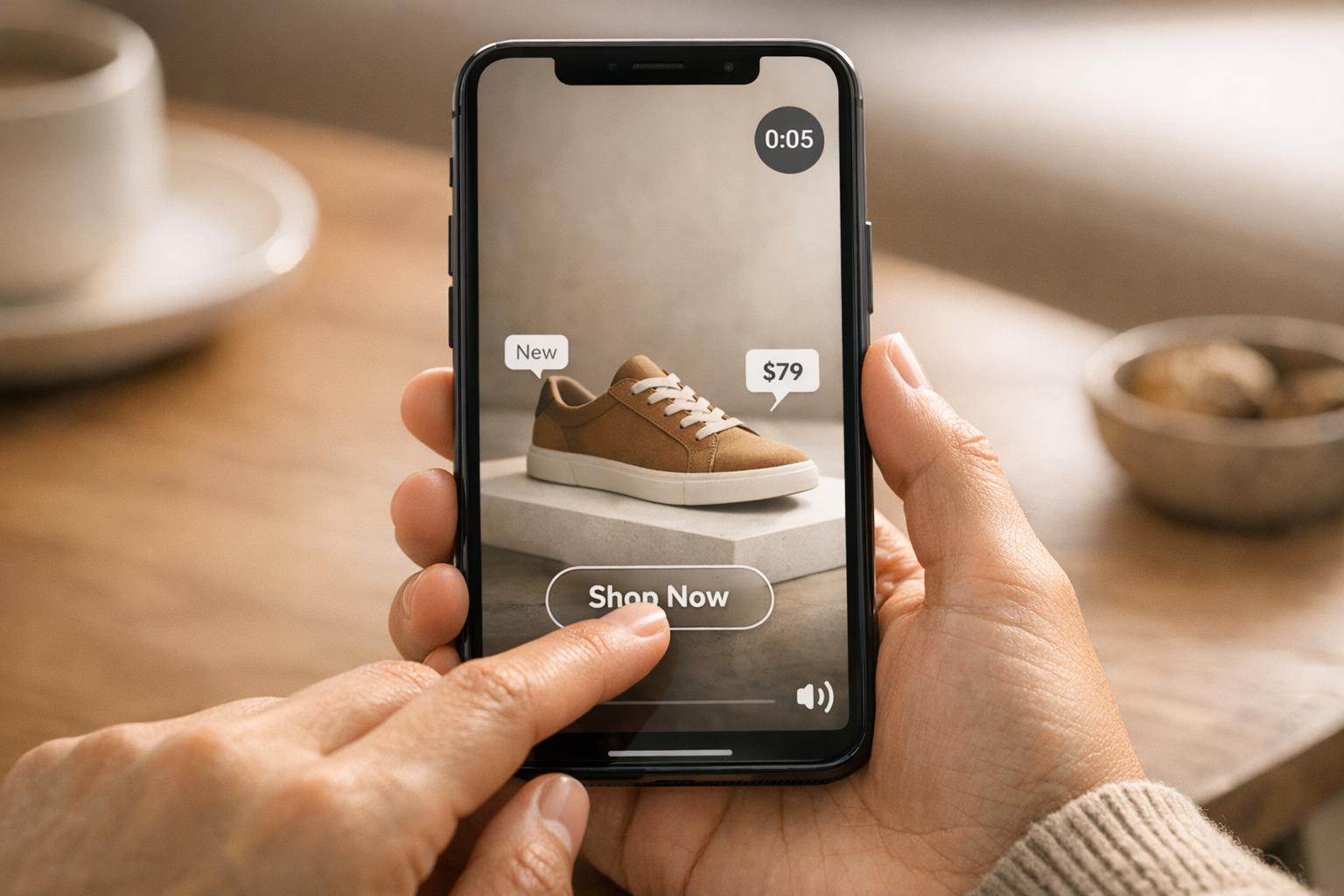
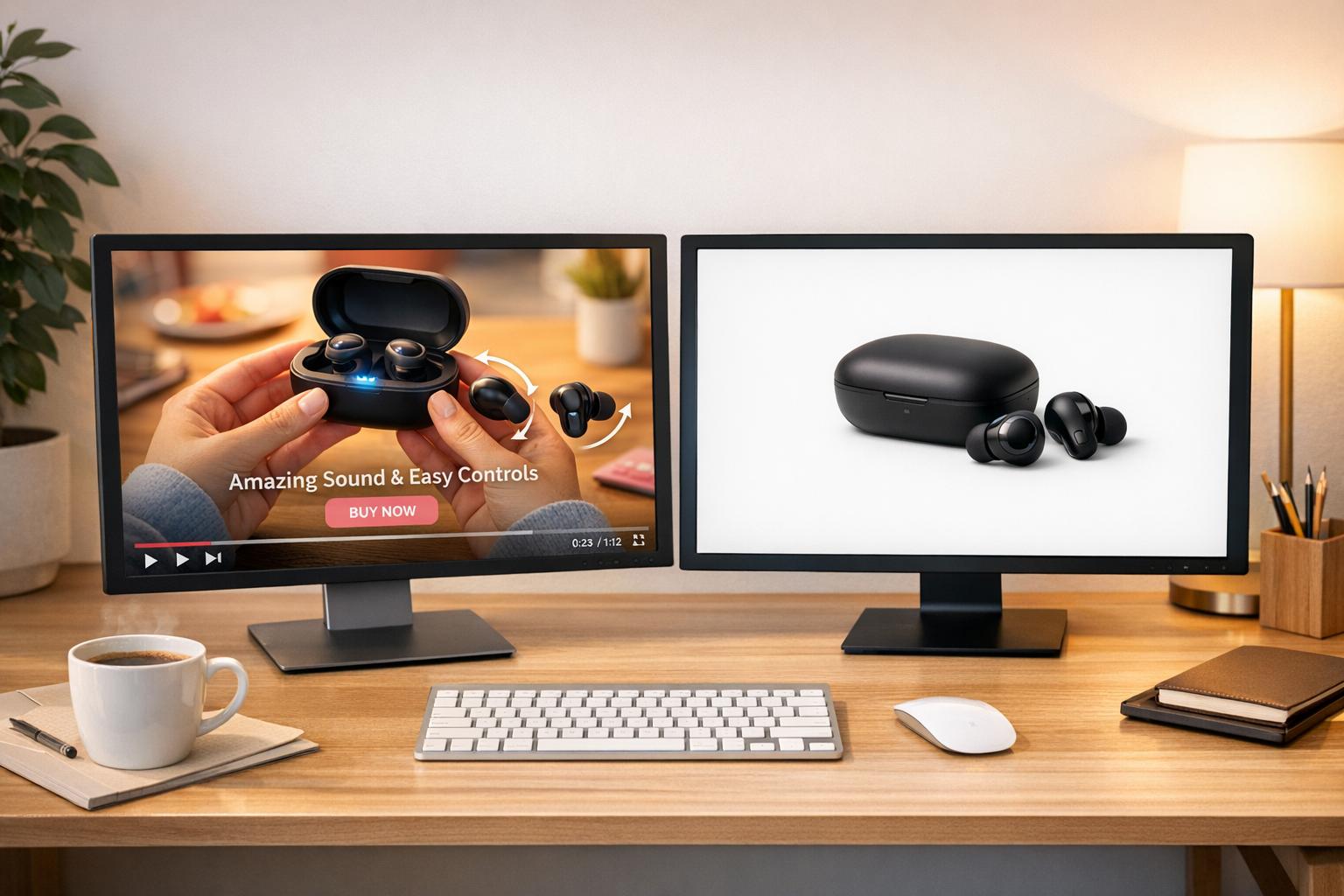
Shoppable videos make it possible for viewers to buy products directly while watching, eliminating the need to leave the video or search for items separately. By embedding clickable product tags and calls-to-action (CTAs) like "Shop Now", these videos streamline the shopping process, boosting engagement and sales.
Key Takeaways:
- What Are Shoppable Videos? Interactive videos with product tags and CTAs that simplify purchasing.
- Why They Work: They reduce friction in the buying process, leading to higher conversion rates - up to 3.5x more than standard videos.
- Benefits for E-Commerce: Increased engagement (66%), longer watch times (44%), and valuable analytics for optimizing strategies.
- How to Create Them: Plan engaging video content, use tools like UWidget or Videeo to add interactive features, and embed them into your store.
Shoppable videos transform passive viewing into active shopping, making them a powerful tool for e-commerce growth.
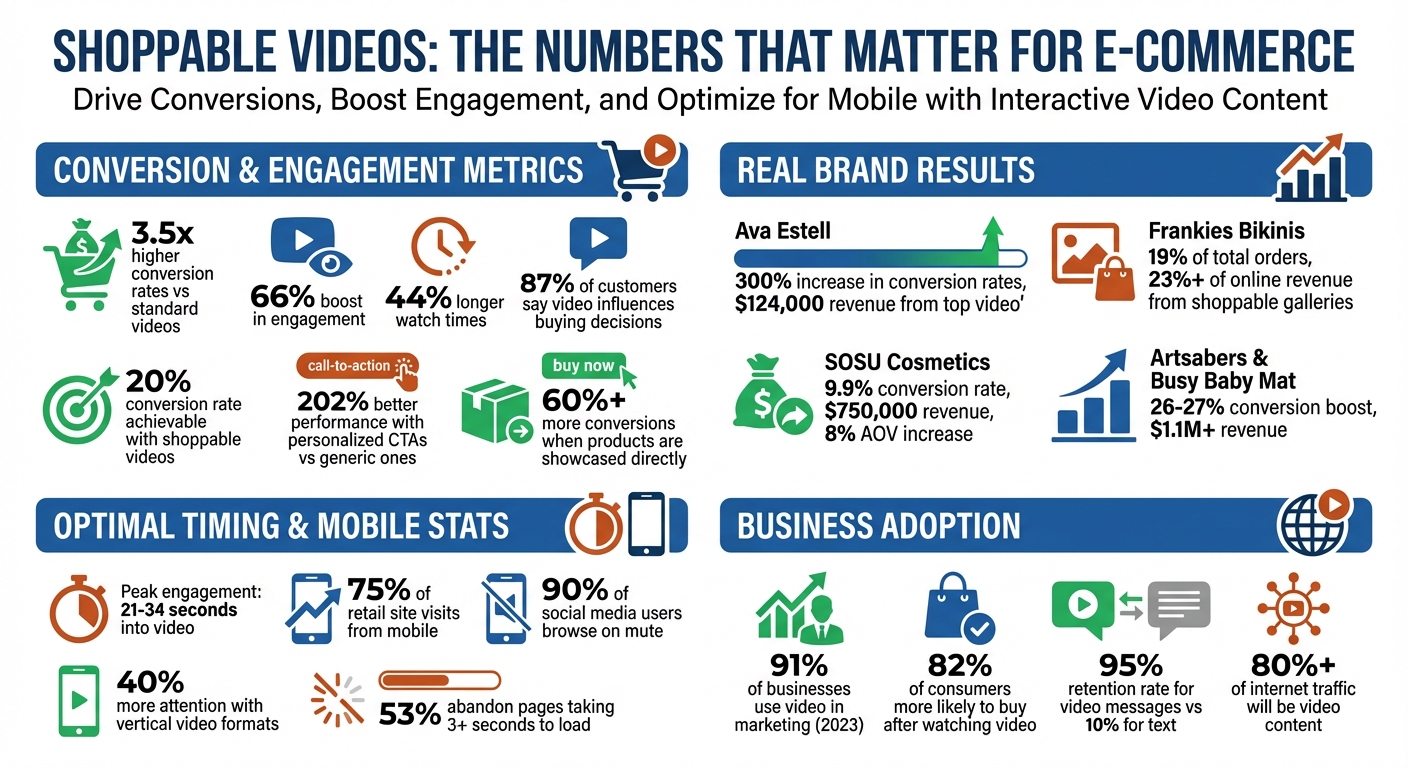
Shoppable Videos Impact on E-Commerce: Key Statistics and Benefits
Why you should add a CTA to EVERY video
Benefits of Shoppable Videos for E-Commerce Stores
Shoppable videos are proving to be game-changers for Shopify stores, outperforming traditional product pages in multiple ways. These interactive tools drive customer engagement, speed up purchase decisions, and provide valuable data insights. The result? Faster sales and smarter optimizations for your store.
Higher Engagement and Conversion Rates
Interactive videos don’t just grab attention - they hold it. Studies show they boost engagement by 66% and keep viewers watching 44% longer than static content. Instead of passively watching, customers actively click on hotspots, check product details, and interact with embedded calls-to-action (CTAs). This active involvement matters, as 87% of customers say video content influences their buying decisions.
The numbers speak for themselves. Take Ava Estell, a skincare brand that used Videowise to integrate shoppable videos. In 2024, they saw a whopping 300% increase in conversion rates, with their top-performing video generating over $124,000 in revenue. Similarly, Frankies Bikinis leveraged user-generated content (UGC) in shoppable galleries via Foursixty, which contributed to 19% of total orders and over 23% of online revenue.
Reducing friction is key. Shoppable videos let viewers tap an "Add to Cart" button right when their interest peaks - usually between 21 and 34 seconds into a video. Personalized CTAs outperform generic ones by 202%, and videos showcasing products directly lead to over 60% more conversions.
Faster Shopping Experiences
Shoppable videos simplify the buying process, combining product discovery and checkout into just a few clicks. Product details like pricing, sizes, colors, and availability pop up instantly within the video, eliminating the need to navigate through multiple pages. This creates a smooth "watch-to-purchase" flow.
This streamlined experience tackles a common e-commerce issue: cart abandonment. With an average abandonment rate of 70%, 18% of which is due to complex checkout processes, features like one-tap checkout and "Quick Add" buttons in shoppable videos make a big difference. By showing textures, colors, and fits in motion, these videos address customer concerns in real-time.
Mobile shoppers, who make up over 75% of retail site visits, particularly benefit from vertical video formats. These layouts grab 40% more attention than horizontal ones, catering to the instant gratification mobile users often seek.
Analytics for Better Decision-Making
Shoppable video platforms offer detailed analytics that go far beyond basic view counts. They track both direct revenue (purchases made within the video) and influenced revenue (purchases made during the same session). This data helps brands pinpoint which videos, CTAs, and product tags are driving sales.
For instance, Artsabers and Busy Baby Mat used shoppable video analytics to refine their strategies, achieving a 26-27% boost in conversions and generating over $1.1 million in revenue. Liana Turbureanu, Content Lead at Videowise, highlights the importance of these insights:
"This data from your website can help you identify potential gaps, hindrances, and even what works for the consumers... basically, decide based on data, not intuition".
Brands can dig deeper by analyzing performance across individual videos, widgets, store pages, and even specific shoppers. Insights into viewer behavior - such as where they drop off or which CTAs get the most clicks - help fine-tune content. Metrics like swipes, completion rates, and zero-party data collected through polls or quizzes enable hyper-personalized marketing strategies.
Shoppable videos are not just an engaging tool - they’re a data goldmine for improving e-commerce performance.
How to Create Shoppable Videos: Step-by-Step
You don’t need a Hollywood studio or advanced tech skills to create shoppable videos for your Shopify store. With the right approach, you can turn your product videos into interactive shopping experiences that boost sales. Here’s how to get started:
Step 1: Plan and Produce Your Video Content
Start by understanding what your audience values. For practical products like kitchen gadgets, focus on how they solve everyday problems. For high-end items, lean into aspirational content that emphasizes lifestyle and emotion. In 2023, 91% of businesses used video in their marketing, so creating quality content is essential.
Grab attention right away with dynamic visuals - think bold colors, quick action shots, or a compelling opening scene. Choose a format that fits your product: unboxing videos are great for new launches, while "how-to" clips work well for instructional content.
For production, you don’t need a fancy setup. An iPhone 15 Pro in Cinematic mode (30 fps) paired with a three-light arrangement - one central ring light and two softboxes at 4,800–5,000K - can deliver professional-looking vertical videos. Don’t forget captions, which make your content accessible and perfect for silent viewing.
Step 2: Use Tools to Add Interactive Features
Once your video is ready, make it shoppable with interactive tools. UWidget is a great option for Shopify users. It offers features like shoppable YouTube Shorts, sticky video players, and product carousels. Starting at $5.99/month and boasting a 5.0/5 rating on the Shopify App Store, it’s an affordable choice.
Other tools include Videeo, which uses AI to place smart CTAs and offers a TikTok-style swipe-up feed with a free tier for up to 1,000 monthly video views. Vidjet is another option, providing code-free widgets and real-time data tracking. These tools connect directly to your Shopify catalog, simplifying the process.
"Shoppable video bridges the gap between inspiration and action - making your video content work harder for your business." - Nolan Ether, Director of Enterprise Content, Vimeo
Step 3: Add Product Tags and CTAs
Turn passive viewers into active shoppers by adding product tags. Use your platform’s tools to link products from your Shopify catalog, creating clickable hotspots that let viewers explore product details without leaving the video.
Keep your calls-to-action (CTAs) short and clear. Phrases like "Buy Now" or "Add to Cart" work well. Stick to one CTA at a time to maintain focus. For added engagement, show transformations - like before-and-after clips for beauty products or outfit changes for fashion items.
Step 4: Embed Videos into Your Shopify Store

After adding tags and CTAs, embed your video directly into your Shopify store. Most platforms provide an embed code or Journey ID, which you can paste into your Shopify theme editor. Place videos strategically - on Product Detail Pages to address customer questions or on your homepage to encourage impulse purchases.
Always test your videos across devices (mobile, tablet, and desktop) to ensure overlays don’t interfere with the viewing experience and that CTAs link correctly to product pages.
Step 5: Test, Launch, and Track Performance
Before launching, preview your video on all devices to confirm that clickable elements, captions, and load speeds work smoothly.
Once live, track key metrics like "Add to Cart" clicks, video completion rates, and sales generated. With 82% of consumers saying product videos influence their purchase decisions, pay close attention to which videos drive the most sales. Use A/B testing to experiment with opening hooks or CTA wording, and refine your strategy based on what resonates with your audience.
sbb-itb-d9e5b3a
Best Practices for Embedded CTAs in Shoppable Videos
A well-placed and thoughtfully designed CTA (Call-to-Action) can turn casual viewers into paying customers. With 82% of people more likely to buy after watching a video, your CTA strategy is a direct line to boosting sales. Here's how to make every click count.
Where to Place CTAs for Maximum Impact
Timing is everything when it comes to CTAs. Mid-roll CTAs, placed after showcasing a product's key benefit, deliver a 16.95% conversion rate, outperforming both pre-roll and end-roll placements.
For product demonstrations, insert your CTA immediately after showing how the product solves a problem. In brand storytelling videos, save the CTA for the end, ensuring viewers who are fully engaged can act right away. Another effective tactic? Use clickable hotspots directly on the product within the video frame. These interactive elements let viewers engage without interrupting playback.
Designing CTAs That Get Clicks
Your CTA should grab attention without feeling out of place. Use bold, contrasting colors that align with your brand's style to make the button pop. Keep the message short and action-driven - phrases like "Shop Now" or "Add to Cart" (just two to three words) work best.
"A well-designed CTA is the final push that converts interest into action." - MotionCue
Take SOSU Cosmetics as an example. By integrating shoppable videos with clear, branded CTAs through the Videowise platform, the company achieved a 9.9% conversion rate and generated over $750,000 in revenue. They also saw an 8% increase in Average Order Value among video-engaged users. To keep viewers focused, limit the screen to a single CTA at a time. And since 90% of social media users browse on mute, always include captions or text overlays to reinforce your message.
Lastly, ensure your CTAs are optimized for mobile users, where the majority of video consumption happens today.
Optimizing for Mobile Users
With 75% of global video consumption happening on mobile devices, designing CTAs for smaller screens is essential. A 9:16 vertical video format works best for mobile, fully utilizing the screen and increasing attention by 40%.
Place large, easy-to-tap buttons mid-screen to accommodate one-handed use. Use high-contrast text with a minimum ratio of 4.5:1 and ensure font sizes are at least 16px for readability. Mobile users expect speed - 53% abandon pages that take more than 3 seconds to load. Compress video files and implement adaptive streaming for instant playback. Finally, test your CTAs on both iOS and Android devices to ensure they display properly across all screen sizes and operating systems.
Measuring Success and Improving Performance
Shoppable videos are just the beginning - tracking their performance is what truly fuels growth. With video content projected to account for over 80% of internet traffic, identifying the right metrics is key to refining your e-commerce strategy.
Key Metrics to Track
Start by keeping an eye on awareness metrics like impressions (how often your video thumbnail appears), view counts, and play rates (the percentage of visitors who click play). Dive deeper into engagement metrics such as watch time, average view duration, and audience retention curves to figure out where viewers lose interest.
When it comes to conversions, focus on metrics like click-through rate (CTR), add-to-cart rate, and sales conversion rate. On average, video CTAs boast a 3.2% click-through rate, but top e-commerce brands using shoppable videos often see rates between 4% and 6%. Additionally, tracking your average order value (AOV) and return on ad spend (ROAS) is crucial. Direct-to-consumer (DTC) brands leveraging shoppable videos strategically report a 20% to 40% higher ROAS.
"A winning video marketing strategy in 2025 isn't just about creating eye-catching content - it's about measuring success in video marketing with the right metrics, platforms, and analytics tools." – Natasha Fernandes, Reportdash
It’s also important to separate direct revenue (purchases made directly from the video player) from influenced revenue (purchases completed during the same session). These distinctions help lay the groundwork for ongoing improvements through testing.
A/B Testing for Better Results
A/B testing takes the guesswork out of optimization. By changing one element at a time - whether it’s the CTA text, video hook, or thumbnail design - you can pinpoint what works best. Make sure to run tests for at least one to two weeks to account for daily variations in viewer behavior.
"A/B testing is your shortcut to data-driven decisions. It's like having a cheat code to learn what your audience actually loves so you can stop relying on hunches and start scaling what works." – Ritika Tiwari, Content Strategist
Experiment with CTA timing by placing buttons at different points in the video. Research suggests that the 21- to 34-second mark often delivers peak engagement. Test direct CTAs like "Buy Now" against softer, value-driven prompts such as "Check It Out" to see which resonates more. For thumbnails, try using faces versus objects, bold contrasting colors, or text overlays to boost click-through rates. You can also test video length - compare short 15-second teasers with longer 60-second demos to identify what keeps viewers engaged. Use these insights to refine your approach further.
Using Data to Refine Your Videos
Once you’ve gathered metrics and testing data, turn those insights into actionable improvements. For example, if your videos have strong views but poor engagement, they might be too long or mismatched with the product. On the other hand, if engagement is high but conversions are lagging, consider adding more relatable content like user-generated clips or adjusting your CTA placement.
To accurately track performance, use UTM parameters on every video link to directly attribute sales and traffic to specific campaigns. Break down performance by video type and placement, and leverage heatmaps to identify where viewers are clicking. Since around 85% of Facebook videos are watched without sound, ensure that captions and visual elements effectively convey your message.
Finally, identify which video widgets and store pages generate the highest ROI, and replicate those successes across your site. Add interactive features like polls and quizzes to collect zero-party data - valuable insights into viewer preferences that can help you fine-tune future videos and create more tailored shopping experiences.
Conclusion
Shoppable videos with embedded CTAs are more than just a passing trend - they're a powerful way to convert viewers into customers. With 91% of businesses already leveraging video in their marketing strategies and shoppable videos achieving conversion rates as high as 20%, the impact is undeniable. These videos seamlessly bridge the gap between discovery and purchase, keeping customers engaged while offering valuable insights to fine-tune your strategy.
The advantages are hard to ignore: smoother conversions, increased engagement - boosting time on page by up to 4X - and mobile-friendly features that cater to the 75% of shoppers browsing on their phones. Plus, video content leaves a lasting impression, with 95% of video messages being remembered compared to just 10% for text. It's a win-win for both visibility and retention.
Getting started doesn’t have to be complicated. Tools like UWidget make it easy to turn your existing YouTube videos and Shorts into interactive, shoppable experiences - no coding required. Starting at just $5.99 per month and boasting a perfect 5.0/5 rating on the Shopify App Store, you can quickly set up features like carousel sliders, sticky video players, and product-tagged galleries.
The best way to dive in? Start with your top-performing YouTube content. Add clear, well-placed CTAs at key moments, and track their performance. Experiment with placements, optimize for mobile users, and let the data guide your adjustments. Keep in mind that personalized CTAs can deliver 202% better results than generic ones, so make every "Shop Now" button count.
Whether you're highlighting product demos, sharing customer testimonials, or offering behind-the-scenes glimpses, shoppable videos create a direct path from casual browsing to cart additions. The tools are ready, the audience is waiting, and the results are measurable. All that's left is to hit play and watch the conversions roll in.
FAQs
How do shoppable videos help boost sales compared to regular videos?
Shoppable videos let viewers shop directly within the video by clicking on embedded call-to-action (CTA) links. This streamlined process keeps customers engaged and increases the chances they'll follow through with a purchase.
Research indicates that 84% of consumers are more likely to buy a product after watching a video. Plus, shoppable formats outperform traditional videos in driving both conversion rates and revenue. By blending captivating content with instant buying options, shoppable videos offer an interactive way to connect with customers and encourage action.
What are the best tools for creating shoppable videos on Shopify?
Creating shoppable videos on Shopify is a straightforward process when you use tools that let you embed interactive features directly into your video content. Take UWidget by Fractal Apps, for instance. It allows you to embed YouTube videos onto product pages and add customizable call-to-actions (CTAs). This makes it easy for shoppers to add items to their cart while watching product demos, offering a smooth and efficient shopping experience.
For those looking to take it up a notch, other tools provide even more advanced options. These include features like product hotspots, “Buy Now” buttons, and even integrated checkout within the video itself. By leveraging these tools, you can transform video views into instant sales, lower cart abandonment rates, and keep your audience engaged on your Shopify store.
What’s the best way to measure the success of my shoppable videos?
To measure how well your shoppable videos are performing, keep an eye on a few critical metrics: click-through rate (CTR), conversion rate, revenue per view, and overall return on investment (ROI).
Leverage video analytics tools to dive into viewer engagement and shopping habits. By analyzing these metrics, you can pinpoint what’s effective, refine your videos, and boost your sales.