Shoppable videos outperform static images in engagement, conversions, and user interaction. While static images are quick to load and cost-effective, they lack interactivity and hold attention for just 38 seconds on average. In contrast, shoppable videos captivate users for 1 minute and 34 seconds, offer clickable elements, and achieve conversion rates as high as 8.2% compared to static images’ 1.4%.
Key Takeaways:
- Engagement: Shoppable videos hold attention 2.5x longer than static images.
- Conversions: Videos convert at 8.2% versus 1.4% for images.
- Interaction: 7% of viewers engage with video elements, while static images lack interactivity.
- Use Cases: Videos excel for complex products, fashion, beauty, and home décor. Images suit quick browsing and technical details.
Quick Comparison:
| Metric | Shoppable Videos | Static Images |
|---|---|---|
| Avg. Engagement Time | 1 min 34 sec | 38 sec |
| Conversion Rate | Up to 8.2% | 1.4% (avg.) |
| Interaction Rate | 7% | None |
| Completion Rate | 75%–90% | N/A |
| Best For | Dynamic products, storytelling | Quick browsing, details |
Shoppable videos are ideal for showcasing products that benefit from dynamic demonstrations or storytelling. Static images remain valuable for fast-loading technical displays. Combining both formats can optimize engagement and sales.
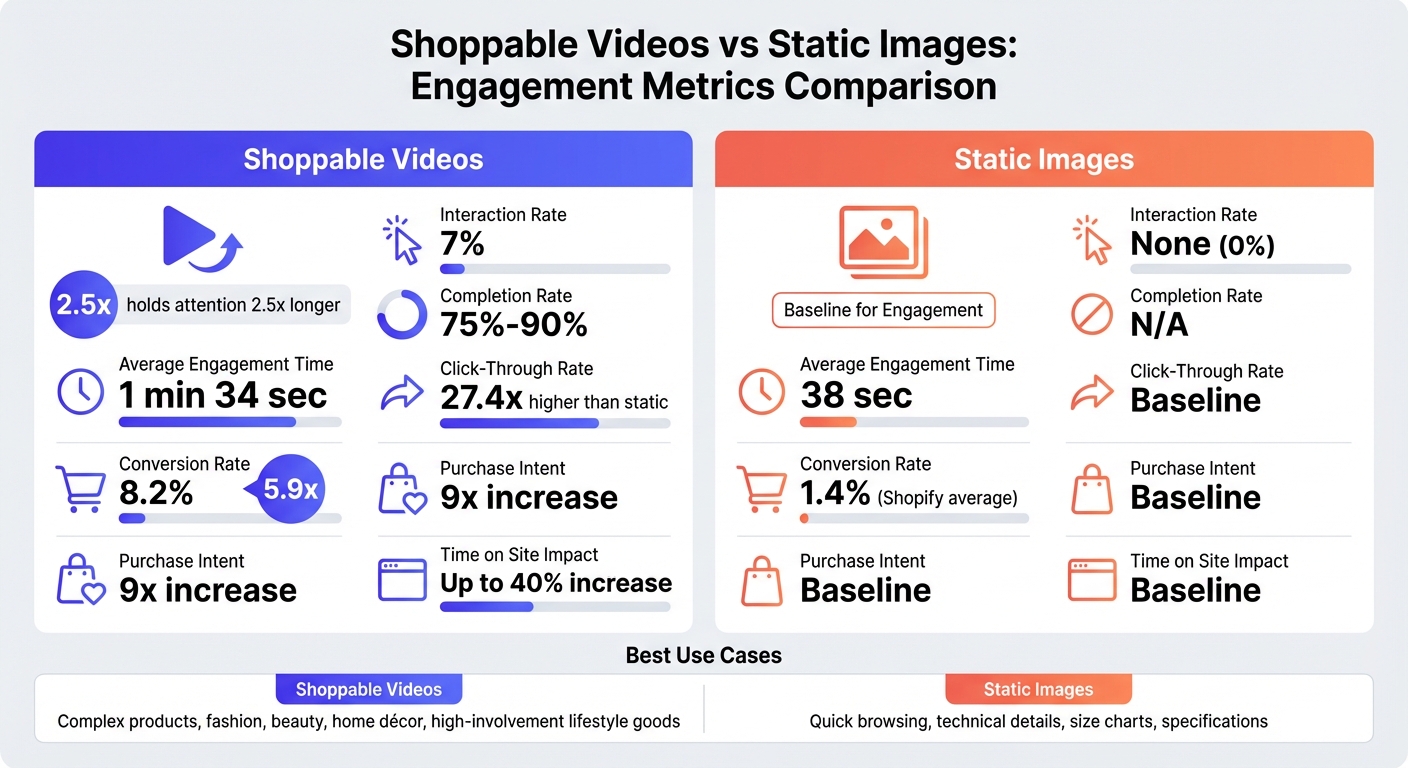
Shoppable Videos vs Static Images: Engagement and Conversion Metrics Comparison
Lively: Shoppable Videos, Stories, and Feeds to Improve Website Engagement
sbb-itb-d9e5b3a
What Are Shoppable Videos?
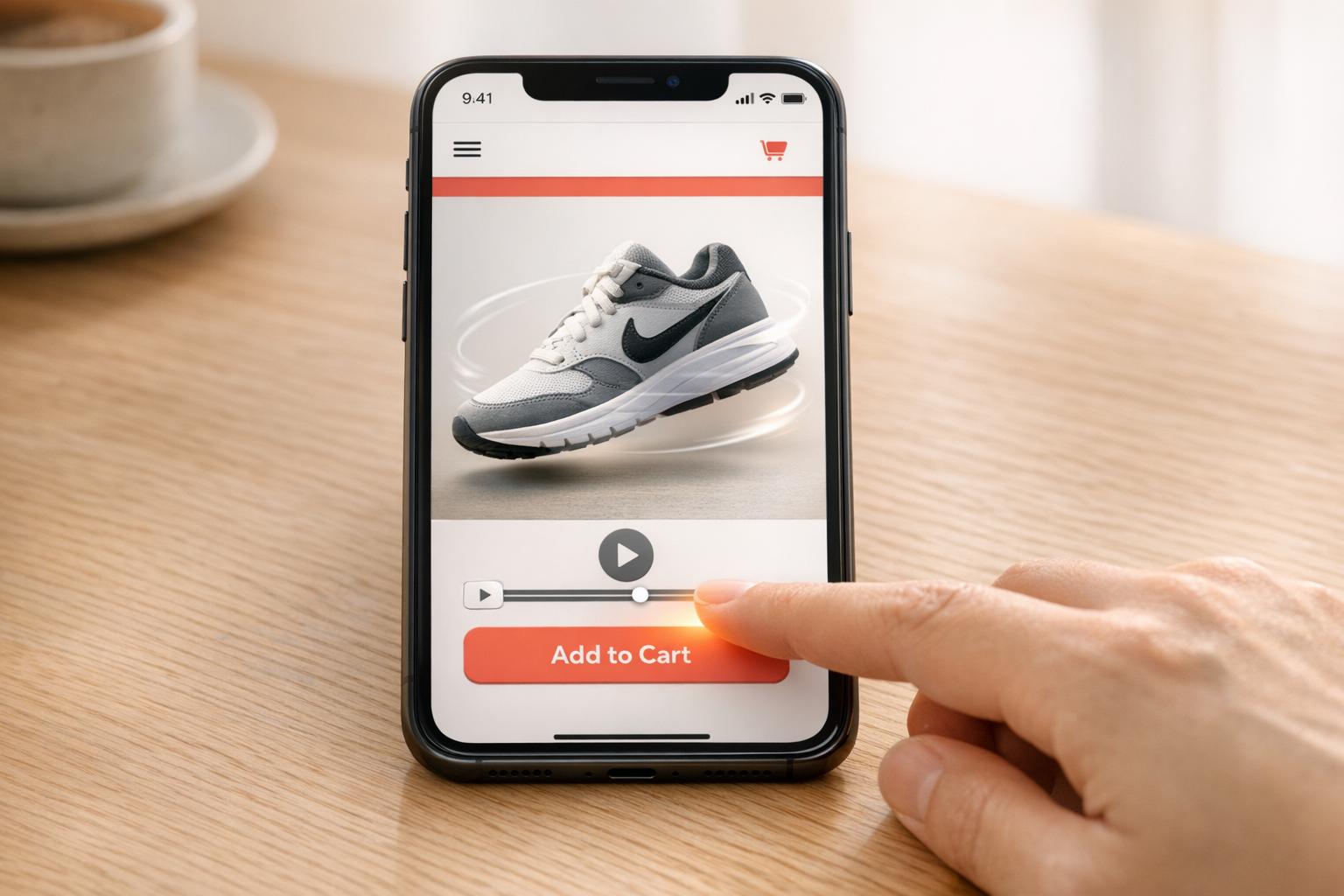
Shoppable videos make it possible for viewers to purchase products directly while watching, thanks to features like embedded links, clickable hotspots, and "Add to Cart" buttons. This seamless integration bridges the gap between browsing and buying, creating a smoother shopping experience.
For Shopify users, these videos sync directly with your product catalog, ensuring that inventory levels, pricing, and checkout options are always up to date. Imagine watching a video showcasing a product and being able to tap on it to see real-time stock availability, accurate pricing, and purchase options - all without leaving the video. This feature transforms passive viewing into an active shopping experience, minimizing the steps between interest and purchase.
Shoppable videos can appear across various platforms, from product pages and homepages to social media channels like TikTok and Instagram, and even email campaigns. Their popularity has skyrocketed, with 91% of businesses prioritizing video as a key marketing tool in 2023.
Features of Shoppable Videos
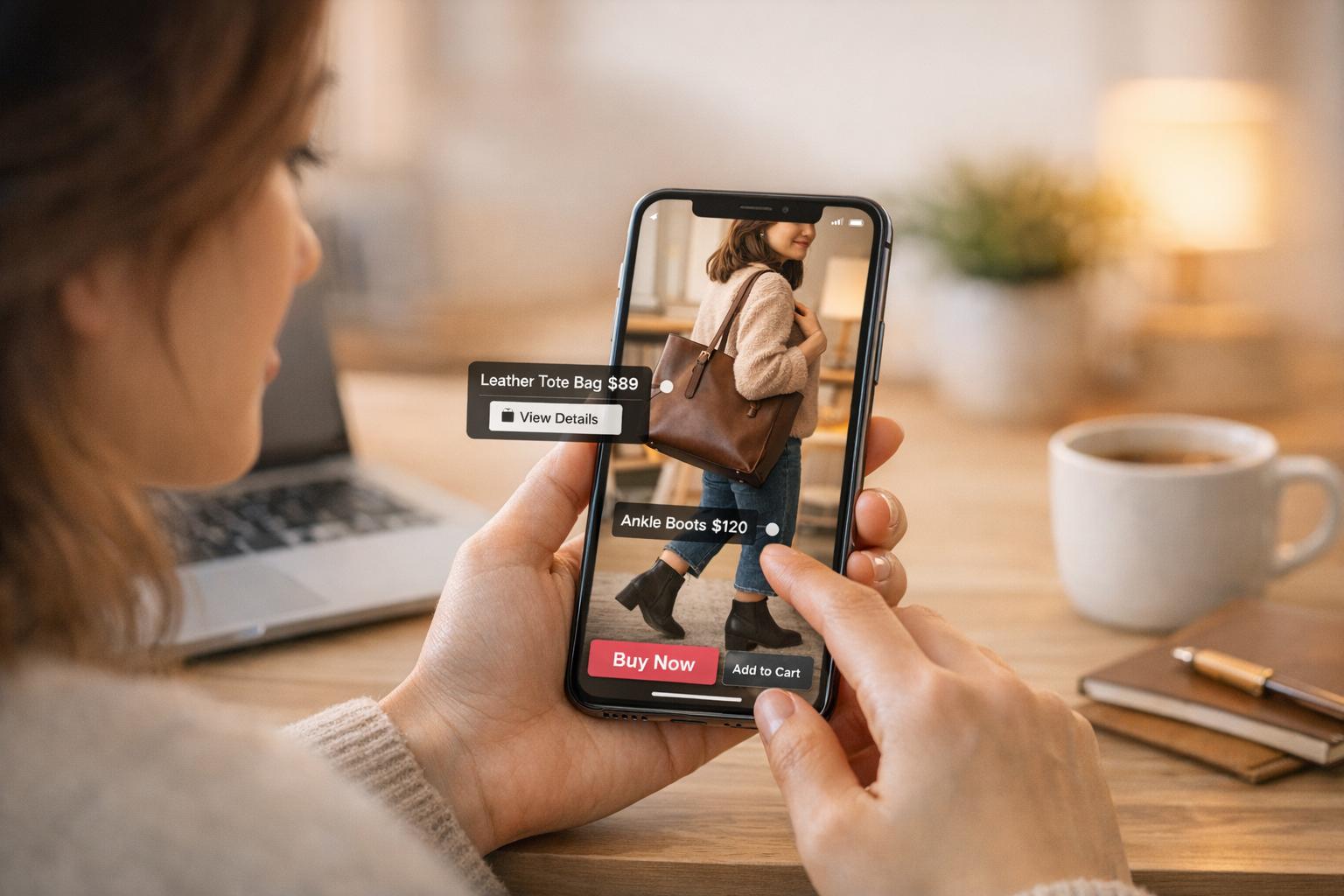
One standout feature of shoppable videos is product tagging. These tags create clickable overlays that pop up when a product appears on screen, offering details like pricing and descriptions. The tags are context-sensitive, appearing only when the relevant product is visible, keeping the video clean and distraction-free.
Another key element is the add-to-cart functionality embedded directly within the video player. Viewers don’t need to open new tabs or remember product names - they can add items to their cart instantly. Some advanced setups even include interactive elements like polls or quizzes. For instance, a fashion brand might ask viewers about their style preferences and then display tailored product suggestions based on their answers.
Real-time inventory updates are another game-changer. The video player pulls live data from your Shopify backend, ensuring customers see accurate stock levels. If an item is running low or out of stock, the video can suggest alternatives, preventing disappointment and keeping the shopping flow uninterrupted.
Benefits of Using Shoppable Videos
The numbers speak for themselves. Viewers spend 47% more time watching interactive videos compared to traditional ones, and these videos boast completion rates as high as 90%. This increased engagement directly impacts sales: 41% of viewers make a purchase after watching shoppable content, and purchase intent is nine times higher compared to standard video formats.
Shoppable videos also boost site engagement. By letting viewers explore multiple products within a single video, they spend more time on your site. For example, Tortuga Backpacks saw a 16% increase in revenue per visitor and a 14% rise in conversion rates after adding shoppable videos. Co-founder Jeremy Michael Cohen noted, "Videowise immediately proved its value. Unlike many tools we've tested, it's cost-effective and paid for itself from the time we installed it."
"Shoppable videos work by eliminating friction in the path to purchase - clickable links, product tags, and pop-ups let customers buy while viewing content."
– Zellor AI
Another advantage is the detailed data these videos provide. Unlike static content, shoppable videos allow you to track exactly which products viewers click on, how long they engage with specific items, and where they lose interest. This granular data helps fine-tune product placement, video length, and overall content strategy, ensuring you’re making decisions based on real viewer behavior rather than assumptions.
Understanding Static Images
Static images have been the backbone of e-commerce product displays for years. Formats like JPEGs, PNGs, and WebP files allow businesses to showcase products from multiple angles, highlight intricate details, and support quick comparisons. These images are non-interactive, aside from basic features like zoom. Platforms like Shopify are well-equipped to manage these file types efficiently.
You'll find static images everywhere in online retail: product galleries, lifestyle shots, logos, size charts, and variation displays. They’re perfect for quick browsing since customers can flip through them without the delays often associated with video content. Plus, they’re generally more affordable to produce than high-quality videos. Let’s take a closer look at how static images shape e-commerce engagement.
Strengths of Static Images
Static images bring several advantages to the table, even as they have their limitations. One of their standout strengths is speed. They load faster than videos, and that’s critical - every second of delay in mobile page loading can slash conversions by as much as 20%. Interestingly, desktop users engaging with static images convert 58% more often than mobile users.
These images also shine when presenting technical details. Whether it’s showing precise dimensions, fabric textures, or color variations side-by-side, high-quality static images provide clear, reliable information. For instance, 90% of shoppers rank high-quality images as "very important" when deciding on a purchase. Stores that invest in professional, optimized photography often see conversion rates as high as 4.7%, compared to the Shopify average of 1.4%.
Limitations of Static Images
The biggest drawback of static images is their lack of interactivity. They depend on the shopper’s imagination to fill in gaps about how a product moves, feels, or performs in real life.
"Static images... rely on shoppers to do the work of imagining use cases [and] don't communicate scale, movement, or texture very well." – Mary Beth Wilson, Eko
This passive nature can lead to lower engagement, particularly among younger audiences. For example, Gen Z and millennials consume 84% and 81% short-form video content, respectively. To them, static-only visuals can feel outdated and less engaging. This highlights the need for a balanced approach when targeting these demographics.
Engagement Metrics: Shoppable Videos vs Static Images
Looking at engagement metrics can help you shape your content strategy to drive the best results. The performance difference between shoppable videos and static images is striking, and these numbers can guide you in making smarter decisions for your store.
Key Metrics for Shoppable Videos
Shoppable videos stand out when it comes to keeping users engaged. On average, they hold attention 2.5 times longer than static images - 1 minute 34 seconds versus just 38 seconds.
What makes them even more powerful is their interactive nature. About 7% of visitors engage with shoppable video elements, whether that’s clicking hotspots, exploring product tags, or even adding items directly to their cart. Completion rates for these videos fall between 75% and 90%, and top-performing brands see conversion rates as high as 8.2%.
The impact extends to ad performance, too. Viewers are 27.4 times more likely to click on video ads than static ones. Interactive video ads can increase purchase intent by up to 9x compared to standard formats. For example, in 2023, Dr. Dennis Gross achieved an 8.2% conversion rate and over $1 million in revenue using shoppable videos, delivering a 328x ROI. Similarly, Ava Estell saw a 23% engagement rate, a 21% conversion rate, and an additional $930,000 in revenue from their shoppable video strategy.
Key Metrics for Static Images
Static images, while less engaging, still have their place. They hold users’ attention for an average of 38 seconds and typically convert at the Shopify average of 1.4%.
One area where static images shine is in load times. They load faster than videos, which is vital because every extra second of mobile page loading can reduce conversions by up to 20%. Interestingly, desktop users respond better to static images, converting at 1.9%, compared to 1.2% for mobile users. However, their lack of interactivity makes it harder to measure deeper engagement beyond basic actions like zooming in on a product.
Comparison Table: Shoppable Videos vs Static Images
Here’s a side-by-side look at how these two formats stack up:
| Metric | Shoppable Videos | Static Images |
|---|---|---|
| Average Conversion Rate | 8.2% (high-performing) | 1.4% (Shopify average) |
| Average Engagement Time | 1 minute 34 seconds | 38 seconds |
| Interaction Rate | 7% | No interactive elements |
| Click-Through Rate | 27.4x higher than static | Baseline |
| Purchase Intent Increase | 9x | Baseline |
| Completion Rate | 75%–90% | N/A |
| Time on Site Impact | Up to 40% increase | Baseline |
The real-world impact of shoppable videos is hard to ignore. For instance, Vibe Kayaks saw a 40% increase in time spent on their site after adding shoppable video widgets featuring user-generated content. Similarly, Tortuga Backpacks reported a 14% boost in conversions on product pages and a 16% increase in revenue per visitor after introducing interactive videos.
When to Use Shoppable Videos Over Static Images
Understanding when to use shoppable videos instead of static images can help highlight your products more effectively. Shoppable videos are particularly useful for items that benefit from dynamic demonstrations or storytelling. In fact, they can boost conversions by up to 86% when used strategically. Here’s a closer look at scenarios where shoppable videos shine.
Best Use Cases for Shoppable Videos
- Complex products and gadgets: If your product has moving parts or requires assembly, a video can show how it works in a way static images simply can't.
- Fashion and accessories: Videos bring clothing and accessories to life, showcasing how fabric moves, how garments fit, and how they look in motion - offering an experience similar to trying them on in a store. For instance, Fashion Floor used shoppable videos on their Shopify store and saw a 33% increase in conversions within just 30 days.
- Beauty and health products: Tutorials, before-and-after clips, and application demonstrations build trust by providing visual proof. These videos show how products work in real-life scenarios, making them more relatable and persuasive.
- Home décor and furniture: Videos allow customers to see furniture or décor from multiple angles, understand how lighting affects colors, and visualize how items fit in a space - details that static images often miss.
- High-involvement lifestyle goods: Products like luxury items or sporting equipment benefit from storytelling that shows them in use. This not only highlights their features but also builds an emotional connection with your brand.
To maximize the impact of shoppable videos, consider keeping product videos short - around 6–10 seconds - and on-site videos between 30–60 seconds. Add captions, as 90% of users browse with their sound off. Floating video bubbles that appear after users scroll 20% of the page can also enhance engagement.
Shopify Tools for Shoppable Video Integration

Shopify offers several tools to seamlessly integrate shoppable videos into your store. For example, UWidget by Fractal Apps lets you embed YouTube videos directly onto your product pages, turning existing video content into shoppable elements. This is especially helpful for brands already producing YouTube content.
When selecting tools, prioritize ones that maintain video quality while loading efficiently. Most modern Shopify video integration solutions work without requiring theme modifications, ensuring they blend smoothly with your store’s design and functionality.
Implementation Guide for Shopify Stores
Once you've selected the best media format, integrating it into your Shopify store is straightforward. Head to Products in your Shopify admin panel, pick the product you want to update, and scroll down to the Media section. From there, you can either click Upload new to drag and drop your files or use Select existing to pull items from your media library. For YouTube or Vimeo videos, simply click Add from URL and paste the link.
Technical Requirements for Shoppable Videos
Shopify supports video files up to 1 GB in size and 10 minutes in length, with resolutions as high as 4K (4096 x 2160 px). If you're deciding on a format, MP4 (H.264) strikes a great balance between quality and file size. Alternatively, WebM can offer faster load times, though it may not display properly on older Safari or iOS versions. It's best to avoid MOV files for your storefront; while they deliver excellent quality, their larger file sizes can slow down your site’s performance.
Optimizing Static Images for Performance
For static images, Shopify recommends uploading high-resolution files at 2048 x 2048 px for square product photos. Shopify will automatically convert these images to the WebP format, which ensures faster loading speeds without losing quality. While Shopify supports images up to 4472 x 4472 px and 20 MB, keeping file sizes smaller is a smart way to improve page load times. If you're using Shopify's modern Online Store 2.0 themes like Dawn, Craft, or Sense, you can add video blocks directly through the theme editor - no coding required. Once your media is optimized, you can further enhance engagement by tapping into Shopify’s specialized tools.
Using Fractal Apps to Increase Engagement
Uploading media is just the beginning. To take customer interaction and conversions to the next level, consider integrating apps designed for engagement. For example, UWidget lets you embed YouTube videos directly on your product pages, turning your existing video content into shoppable elements - all without requiring theme modifications. If you’re already using YouTube to drive traffic, this app can transform those assets into powerful conversion tools. Another great option is ILikeThat, which adds product like buttons to your store, creating more ways for customers to engage. Both apps integrate smoothly with your store's design and maintain quick load times.
Conclusion
When comparing engagement metrics, shoppable videos clearly outperform static images. While static images hold attention for an average of 38 seconds, shoppable videos keep viewers engaged for 1 minute and 34 seconds - a significant difference. This extended engagement directly impacts conversions, with shoppable videos achieving a conversion rate of 8.2%, compared to just 1.4% for static images. Brands leveraging shoppable video strategies have reported impressive revenue gains, with some seeing ROI multiples exceeding 300x.
Both formats have their strengths. Shoppable videos shine when showcasing products that benefit from demonstrations, such as gadgets, beauty items, or home décor. These videos help build trust by showing the product in action. On the other hand, static images are better suited for providing quick-reference details like technical specs, size charts, or other information needed during the final decision-making stage. For example, Fashion Floor saw a 33% boost in conversions within 30 days of integrating shoppable videos, while Apolla’s shoppable tutorials achieved a 9.94% conversion rate, generating over $193,800 in revenue.
Tools like UWidget make it easier to integrate shoppable videos into your strategy. If you’re already creating content on platforms like YouTube, UWidget can convert those videos into shoppable assets without requiring changes to your website’s theme. Vibe Kayaks, for instance, saw a 40% increase in time spent on their site after adding shoppable video widgets. These seamless video experiences remove barriers between discovery and purchase, driving a 9x higher purchase intent.
To optimize conversions, focus on identifying which products benefit most from video demonstrations and test both formats. By combining the immersive storytelling power of videos with the clarity of static images, you can create a balanced and effective conversion strategy.
FAQs
Do shoppable videos slow my Shopify store?
Shoppable videos won’t slow down your Shopify store. In fact, they can enhance customer engagement and drive conversions by allowing shoppers to make purchases directly from the videos. This streamlined shopping experience minimizes barriers in the buying process and has the potential to significantly increase your e-commerce sales.
Which products should use video vs images?
Videos are perfect for highlighting standout features, showing how a product works, or delivering an immersive experience - especially for items that are intricate or need to be experienced to be fully appreciated. They can greatly increase both engagement and conversions. On the other hand, static images work best for straightforward products where crisp, high-quality visuals can effectively showcase the product's look and build customer confidence. The key is to select the format that aligns with your product's complexity and the level of interaction needed to elevate the shopping experience.
How do I measure shoppable video ROI?
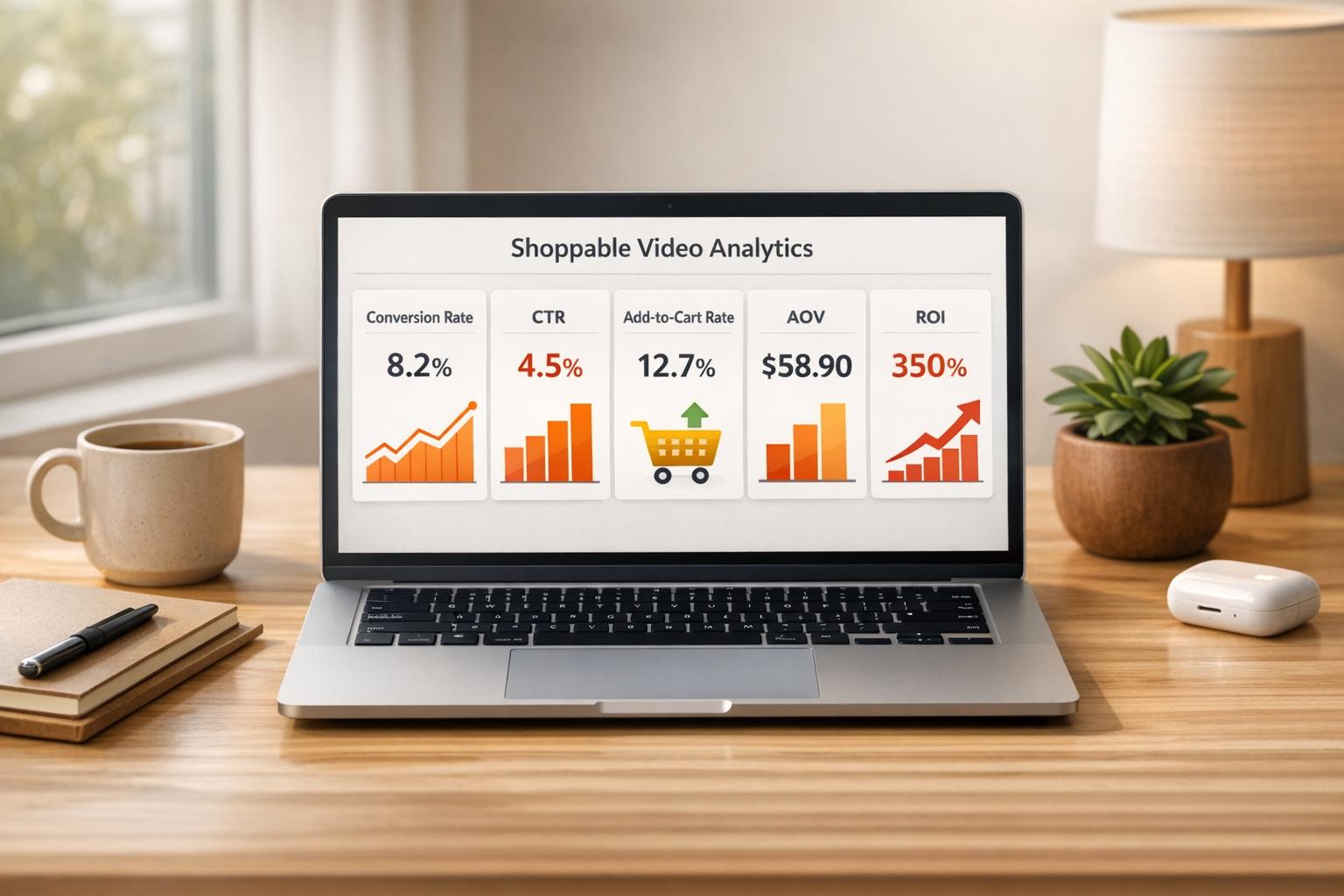
To gauge the success of shoppable videos, start by tracking Return on Investment (ROI). This is calculated by dividing the revenue generated by the campaign by its total cost. Beyond ROI, pay attention to engagement metrics like conversion rate, click-through rate (CTR), add-to-cart rate, and average order value (AOV). These numbers reveal how well your shoppable videos are performing in terms of driving sales and encouraging user interaction, offering a clear picture of their financial impact.