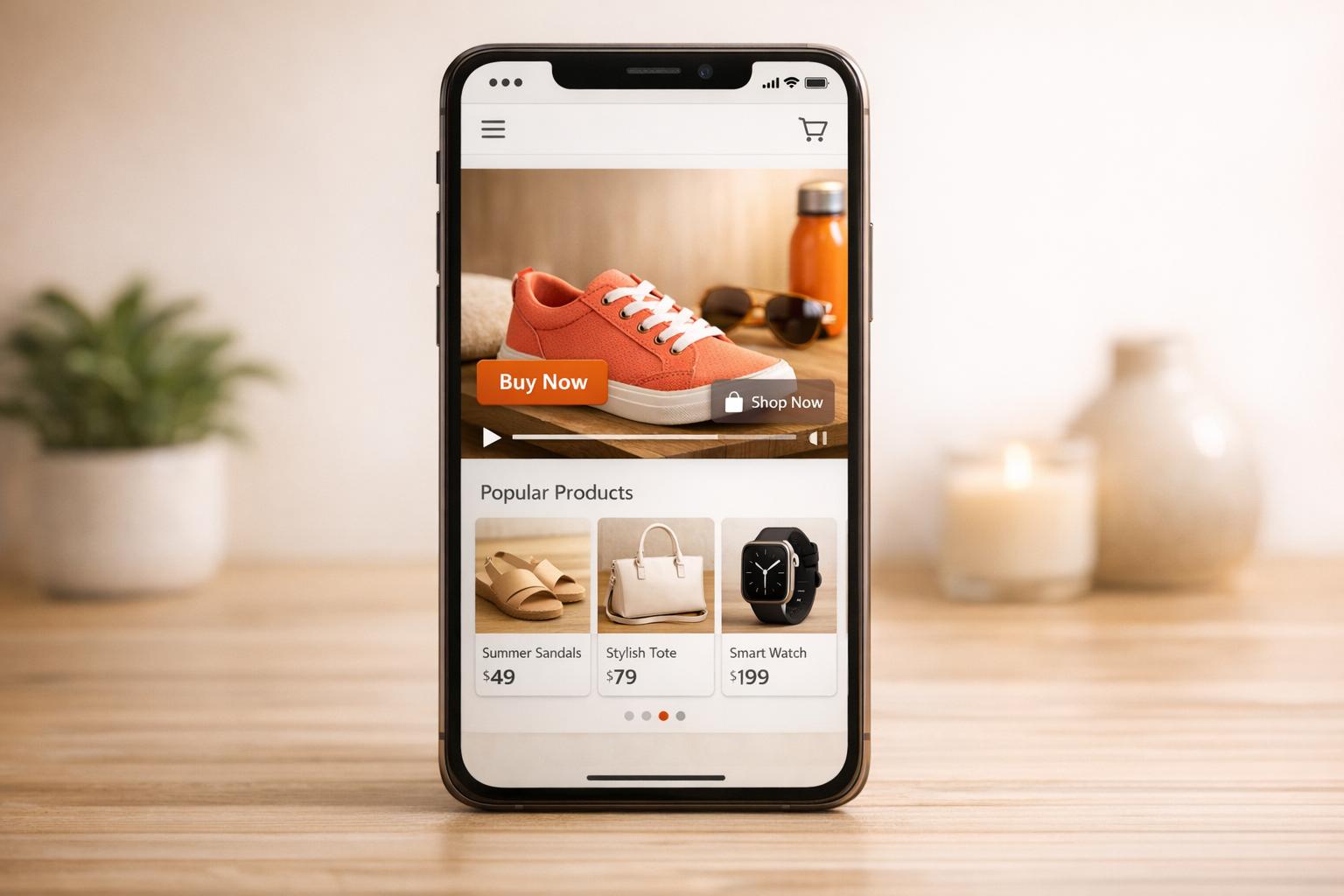
Video commerce is transforming how brands showcase their sustainability efforts, and 2025 consumer trends prove why this matters:
- 62% of consumers trust companies more than governments to take climate action.
- 71% prefer brands reducing their carbon footprint, but price and quality still lead purchase decisions.
- Products with sustainability certifications saw a 13.3% sales increase in 12 weeks.
- 83% demand transparency - vague claims like "eco-friendly" can drive shoppers away.
Video content shortens decision-making by 6 days and boosts trust when it highlights specific benefits like durability or lower costs. To stay competitive, brands are adopting eco-friendly production methods, like AI editing, virtual sets, and optimized streaming, reducing emissions while cutting costs.
For Shopify merchants, embedding engaging, value-driven videos directly into stores using tools like UWidget can improve conversions and build trust with values-driven shoppers.
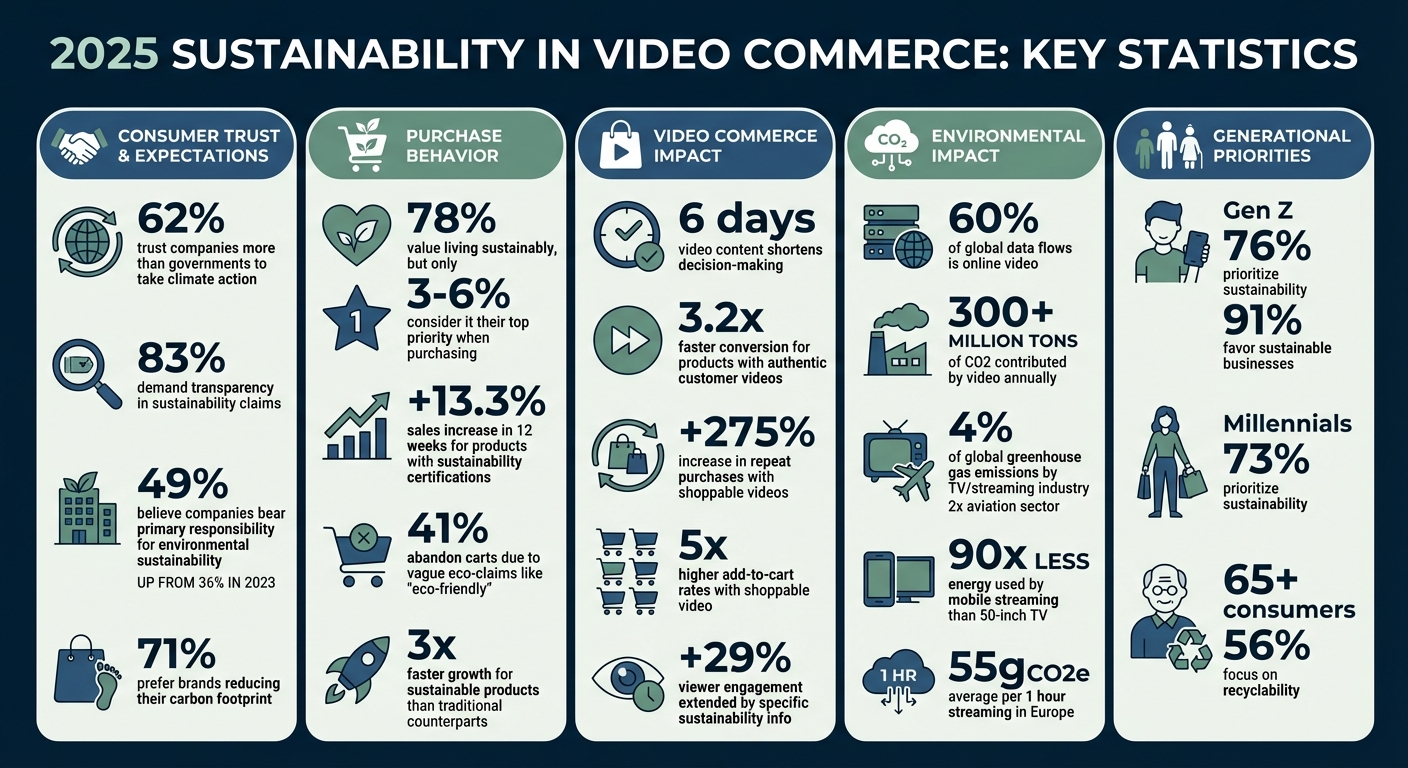
2025 Sustainability in Video Commerce: Key Consumer Statistics and Impact Data
2025 Consumer Research Findings
Consumer Demand for Eco-Conscious Brands
In 2025, 49% of consumers believe companies bear the primary responsibility for improving environmental sustainability, a notable rise from 36% in 2023. This growing expectation shifts the focus of climate action from individuals and governments to businesses.
When it comes to buying habits, the impact of sustainability messaging is clear. Products marketed as sustainable are seeing sales grow nearly three times faster than their traditional counterparts. Yet, there's a catch: while 78% of consumers value living sustainably, only 3%-6% consider sustainability their top priority when making purchases. For video commerce, this highlights the importance of presenting eco-friendly messaging as a secondary benefit - with primary factors like price, quality, and convenience leading the conversation.
Generational differences further shape how sustainability resonates. Older consumers (65+) focus on recyclability (56%), whereas Gen Z is more concerned about the environmental impact of manufacturing. This insight underscores the need for video content that weaves sustainability into core product benefits, tailoring messages to align with each generation's priorities.
Ethical E-Commerce Market Expansion
The ethical fashion market is on a rapid growth trajectory. Forecasts predict it will grow from $7.5 billion in 2022 to $16.8 billion by 2032, nearly doubling in size. This trend mirrors a broader shift toward mindful consumption across various product categories.
Several factors are driving this growth, including evolving consumer segments. The "Sustainably Engaged & Optimistic" group, made up largely of middle-income urban residents, looks for tangible evidence before committing to sustainable choices. On the other hand, the "Sustainably Engaged but Pessimistic" segment - dominated by Gen Z and Millennials - seeks practical solutions and reassurance. For video commerce, this means crafting distinct messages for each audience, with an emphasis on transparency and actionable benefits across all groups.
Eco-Friendly Video Production Methods
Remote and Cloud-Based Production
For Shopify store owners, adopting cloud-based workflows offers a double benefit: cutting costs and showcasing environmental responsibility. These systems eliminate the need for studio travel, reducing emissions, while relying on renewable-powered, energy-efficient data centers. A small but impactful step, like optimizing file sizes, can significantly lower energy use for transmission and storage. Considering that online video accounts for 60% of global data flows and contributes over 300 million tons of CO2 annually, this is no small matter. Mobile optimization is especially impactful - streaming on smartphones uses 90 times less energy than on a 50-inch TV.
On top of streamlining logistics, advanced editing methods help reduce the environmental toll even further.
AI Editing and Virtual Sets
AI-powered editing tools allow brands to repurpose existing footage, cutting down the need for new shoots. These tools can automatically extract key scenes from longer videos and reformat them into short clips for platforms like social media, saving both resources and time.
Take Arnette, for example. The eyewear brand saw a 32% increase in conversions while lowering its digital carbon footprint by optimizing for dark mode. Meanwhile, a Google Ads team slashed creative costs by 55% and prevented approximately 500kg of CO2 per crew member by opting for train travel instead of flights during a European shoot. In another case, R/GA created an AI-generated brand film for Moncler in 2025, proving that even luxury brands can embrace AI to replace traditional, resource-heavy production methods.
Virtual sets and green screens take it a step further, eliminating the need for physical set construction. This cuts the emissions related to transporting materials and crew, making production not only more efficient but also more eco-conscious.
Optimized Video Streaming
How videos are delivered can significantly impact energy consumption and emissions. For context, the video advertising and TV/streaming industries account for about 4% of global greenhouse gas emissions, which is twice as much as the aviation sector. Streaming just one hour of video in Europe carries an average carbon footprint of 55gCO2e.
Shopify stores aiming to promote sustainability can make a difference by optimizing video delivery. For instance, using darker color palettes in video content reduces the energy needed for devices to display visuals. Server-side tagging - where tracking happens on servers instead of user devices - cuts CPU usage and network traffic. Compressing videos and selecting the right bitrates (e.g., standard definition for simple product demos and high definition only when necessary) further reduces data transmission without compromising the viewer experience.
"Moving to dark mode or reducing the brightness of creative assets can dramatically reduce emissions with the added benefit of boosting site performance." - Jean Semere, Head of Engineering, Google Professional Services
Sustainable Marketing: How to Win Eco-Conscious Consumers in 2025
How Sustainability Messaging Affects Conversion Rates
Sustainability messaging doesn’t just make your brand look good - it drives sales. A 2025 study analyzing 45,000 products on Amazon revealed that joining the Climate Pledge Friendly sustainability program led to a 13.3% increase in Gross Merchandise Sales and a 4.4% rise in shipped units within just 12 weeks of adoption. For platforms like Shopify, clear and honest eco-messaging has a direct impact on conversions.
Details matter when it comes to sustainability. Vague claims like "eco-friendly" can backfire, with 41% of shoppers abandoning their carts because of such generic messaging. On the other hand, providing specific, verifiable sustainability information can extend viewer engagement by 29%. For example, instead of saying "responsibly made", explain what that means - like highlighting that a product was "sewn in a solar-powered factory." When shoppers can see and understand your efforts, especially through video, they’re more likely to trust your brand and complete their purchase. This kind of transparency sets the stage for immersive, engaging content that resonates with customers.
Higher Engagement with Immersive Video Formats
Videos showcasing real sustainability efforts outperform static images or plain text by a significant margin. For instance, products featuring authentic customer videos convert visitors 3.2 times faster. User-generated content often feels more genuine and relatable than overly polished corporate ads. YouTube, in particular, dominates as a platform for product research, with users watching over 35 billion hours of shopping-related content in the past year. Additionally, 78% of viewers agree that YouTube creators are the most trusted for product recommendations.
For Shopify store owners, embedding YouTube videos that highlight your sustainability practices can reduce the average shopper’s decision-making time by six days. Tools like UWidget make it simple to add YouTube galleries, carousels, and playlists directly to your store. This allows customers to explore your sustainability story without leaving your site, creating a seamless and interactive shopping experience.
Interactive Videos and Transparent Brand Stories
Rather than just claiming sustainability, show it through interactive, shoppable videos that inspire immediate action. Brands using shoppable video commerce have seen a 275% increase in repeat purchases, with add-to-cart rates up to five times higher than traditional formats. In 2024, luxury apparel brand Nour Hammour introduced shoppable editorial lookbooks on their Shopify store, resulting in a 63% year-over-year increase in conversion rates and a 128% jump in total sales.
Rebecca Minkoff took this a step further by incorporating 3D modeling and augmented reality into their online store in 2024. Allowing customers to interact with 3D product views increased the likelihood of adding items to carts by 44% and completing purchases by 27%. Uri Minkoff, the brand’s co-founder and CEO, explained:
"3D media makes for a much more interactive shopping experience. Customers can examine our products from every angle... which helps them get a better sense of quality, size, and other details that matter".
Similarly, Zeina El Zein, Communications and Ecommerce Director at Nour Hammour, shared:
"We wanted our clients to immerse themselves into our world through compelling storytelling... [the lookbook] allows clients to scroll through campaign images as though they are reading a fashion editorial story and shop on the spot".
Transparency is no longer optional. With 83% of consumers expecting brands to openly share their sustainability practices and 22% having boycotted brands over poor ethical standards, it’s critical to back your video content with verifiable proof. Use certifications, show your supply chain, and let real customer testimonials speak for themselves. This approach not only encourages immediate purchases but also builds trust that keeps customers coming back for more.
sbb-itb-d9e5b3a
2025 Sustainability Tools for Shopify Stores

Shopify continues to elevate eco-conscious commerce by offering tools that help merchants effectively communicate their sustainability efforts. As the demand for environmentally responsible brands grows, these tools provide an opportunity to combine practical solutions with authentic messaging. In 2025, Shopify merchants can tap into advanced technologies that make sustainability-driven video content both engaging and profitable. With 82% of shoppers prioritizing brands that reflect their values, these tools are more relevant than ever.
AI Personalization and AR/VR Features
AI-driven video campaigns are transforming how businesses tailor sustainability messages to diverse audiences. A great example is Bayer’s 2023 "The DiversiTree Project" for Claritin, which utilized Google AI-powered Video Reach campaigns to generate over 20 million YouTube impressions. This campaign also showcased the power of combining AI with creativity, as Catherine Vennat, GM and VP of U.S. marketing at Bayer, explained:
"Knowing Google AI was powering the work meant we could spend more time thinking about the story and its relevance, and let AI turn up the volume on the work".
On top of AI, AR features are making a significant impact. Augmented reality allows customers to preview products before purchasing, reducing returns and minimizing shipping emissions and packaging waste. This aligns perfectly with the preferences of 91% of Gen Z, who favor businesses with sustainable practices. By combining AI and AR/VR capabilities, Shopify merchants can deliver immersive experiences that not only meet customer expectations but also reinforce environmental commitments.
Adding Video Content with UWidget

Incorporating sustainability-focused videos directly into your Shopify store has never been easier. Tools like UWidget simplify the process by allowing merchants to embed YouTube galleries, carousels, playlists, and sticky videos seamlessly onto their store pages. Video content not only engages customers but also streamlines decision-making, meeting the growing demand for visual content. With UWidget, Shopify merchants can enhance on-site engagement while delivering an eco-friendly shopping experience.
Comparison: Traditional vs. Eco-Friendly Video Production
The contrast between conventional and eco-friendly video production methods is stark. Traditional production often involves flying crews to locations, constructing physical sets, and creating assets meant for single-use. On the other hand, eco-friendly production embraces remote workflows, virtual sets, and repurposed content. These greener practices not only cut emissions but also streamline production, saving time and money.
Take Google's marketing team, for example. In July 2023, they slashed creative costs by 55% by opting for train travel instead of flights for four videographers. This choice saved roughly 500 kg of CO₂ per crew member. Considering that the TV and video streaming industry is responsible for 4% of global greenhouse gas emissions - twice that of the aviation sector - the impact of such changes is undeniable.
Here’s a side-by-side look at key production areas:
| Feature | Traditional Video Production | Eco-Friendly Video Production |
|---|---|---|
| Travel | Relies on international flights for crews and talent | Remote production, train travel (5–6× less CO₂), or collaborations with local creators |
| Sets | Physical sets with significant material waste | Virtual sets, AI-generated backgrounds, and digital environments |
| Asset Usage | Single-use assets tailored for specific campaigns | Content repurposing, remixing, and AI-driven versioning |
| Delivery | High-brightness, long-form content | Dark mode–optimized, compressed, and short-form content |
| Energy Impact | High-resolution, uncompressed files | Efficient compression; 15-second ads consume less electricity while achieving 48% viewer attention compared to 19% for 60-second ads |
Switching to eco-friendly production benefits Shopify merchants in more ways than one. Beyond reducing carbon footprints, these methods help create engaging video content that can drive higher conversion rates. This aligns with growing consumer demand for sustainable practices.
The advantages go further than just environmental gains. For instance, when Arnette, an eyewear brand, introduced a dark-mode browsing option on its website in July 2023, the site was rated 59% cleaner than the average webpage. It also achieved a 32% higher conversion rate among visitors who used the feature. Jean Semere, Head of Engineering at Google Professional Services, emphasized the dual benefits of such changes:
"A simple step like moving to dark mode or reducing the brightness of creative assets can dramatically reduce emissions with the added benefit of boosting site performance".
For Shopify merchants, the decision is becoming increasingly straightforward. Eco-conscious video production methods not only cut costs and improve performance but also appeal to the 71% of consumers who prefer brands committed to reducing their carbon footprint. Transitioning from resource-heavy traditional techniques to more sustainable approaches isn’t just better for the planet - it’s a smart business move that resonates with today’s values-driven shoppers.
Key Takeaways for Shopify Store Owners
Video commerce with a focus on sustainability is proving to be a powerful growth driver. A whopping 71% of consumers prefer eco-conscious brands, and 83% want transparency from the companies they support. With younger generations like Gen Z (76%) and Millennials (73%) prioritizing sustainability in their purchases, and their high consumption of video content, aligning your video marketing with these values could give your Shopify store a real edge.
Practical production methods paired with meaningful storytelling can help you cut costs while keeping your audience engaged. Techniques like remote filming with local crews, AI-assisted editing, and virtual sets not only lower production expenses but also reduce emissions, showing your commitment to sustainable practices. Plus, values-based video content is the second most effective format for generating leads, and shoppable videos can lead to add-to-cart rates that are up to five times higher. For Shopify merchants, tools like UWidget make it simple to add YouTube videos to your store. Use these to share behind-the-scenes looks at your sustainability efforts or tutorials on product care - both of which build trust with your audience. This mix of cost efficiency and authentic storytelling can help you communicate your values openly, which is key to earning consumer trust.
Consumers are increasingly looking to brands to take the lead on sustainability. Sharing tangible examples of your efforts - like switching to eco-friendly packaging, working with local suppliers, or launching carbon offset programs - through video can strengthen your connection with your audience. As Frank Maguire from Sharethrough explains:
Consumers are placing significant trust in brands to drive sustainability within digital advertising - and advertisers are taking notice.
Brands that focus on sustainability are outperforming their competitors. For instance, products in the Climate Pledge Friendly program experienced a 13.3% sales boost in just 12 weeks. Shopify store owners can tap into this momentum by optimizing video production and delivery. Create short, educational videos that highlight how your eco-friendly practices translate into benefits like durability and cost savings. This approach also resonates with the 70% of consumers who are open to reducing video streaming if it helps cut carbon emissions. By combining these strategies, you can meet the growing demands of today’s eco-conscious shoppers while strengthening your business.
FAQs
How does video commerce build trust in sustainability claims?
Video commerce is reshaping how brands communicate their sustainability efforts, making them more transparent and easier to verify. Instead of depending solely on static labels, companies can use product videos or livestreams to present tangible proof - things like carbon-footprint data, behind-the-scenes supply-chain footage, or third-party certifications. This format allows shoppers to directly see and engage with the evidence, creating a stronger sense of trust in the claims being made.
Studies show that U.S. consumers are increasingly looking for interactive features in video content. Elements like clickable links or on-screen data not only make the experience more engaging but also help shoppers make better-informed choices. By incorporating clear metrics and visual evidence into videos, brands can close the gap between their sustainability promises and actual performance. These interactive formats also encourage a two-way dialogue, allowing viewers to dive deeper into the details or ask questions, making sustainability messaging feel more genuine and trustworthy.
How do AI and virtual sets support eco-friendly video production?
AI-powered virtual influencers and computer-generated sets are changing the way brands produce video content. Without the need for travel, physical props, or energy-intensive lighting, these tools help cut down on carbon emissions and reduce waste. By swapping traditional on-location shoots for virtual sets, production teams can slash energy consumption, eliminate material waste, and significantly decrease the environmental impact tied to crew logistics.
Beyond the environmental benefits, AI also simplifies the creative process. It allows for quick updates to elements like graphics, subtitles, and product overlays, making it easier to maintain consistent sustainability messaging across different channels. This not only trims production costs but also strengthens consumer trust by presenting clear, data-backed eco-friendly initiatives.
For Shopify merchants, tools like Fractal Apps’ UWidget offer a seamless way to embed these AI-driven, eco-conscious videos directly onto product pages. The result? Engaging, shoppable content that boosts conversions while championing sustainability.
How does sustainability messaging impact e-commerce conversion rates?
Sustainability messaging isn't just a trend - it’s a powerful tool for driving e-commerce conversions by resonating with what shoppers care about most. In fact, research reveals that 66% of U.S. consumers view corporate responsibility as a priority, and a whopping 80% are willing to pay more for products that are sustainable. A great example of this in action is Amazon’s Climate Pledge Friendly program, which boosted gross merchandise sales by 13.3% and overall sales by 12.5% in just 12 weeks.
When brands communicate their eco-friendly efforts, they build trust, create loyalty, and connect with the growing wave of environmentally conscious buyers. Incorporating clear and honest sustainability messaging into video commerce strategies can strongly influence purchasing decisions and lay the foundation for lasting growth.